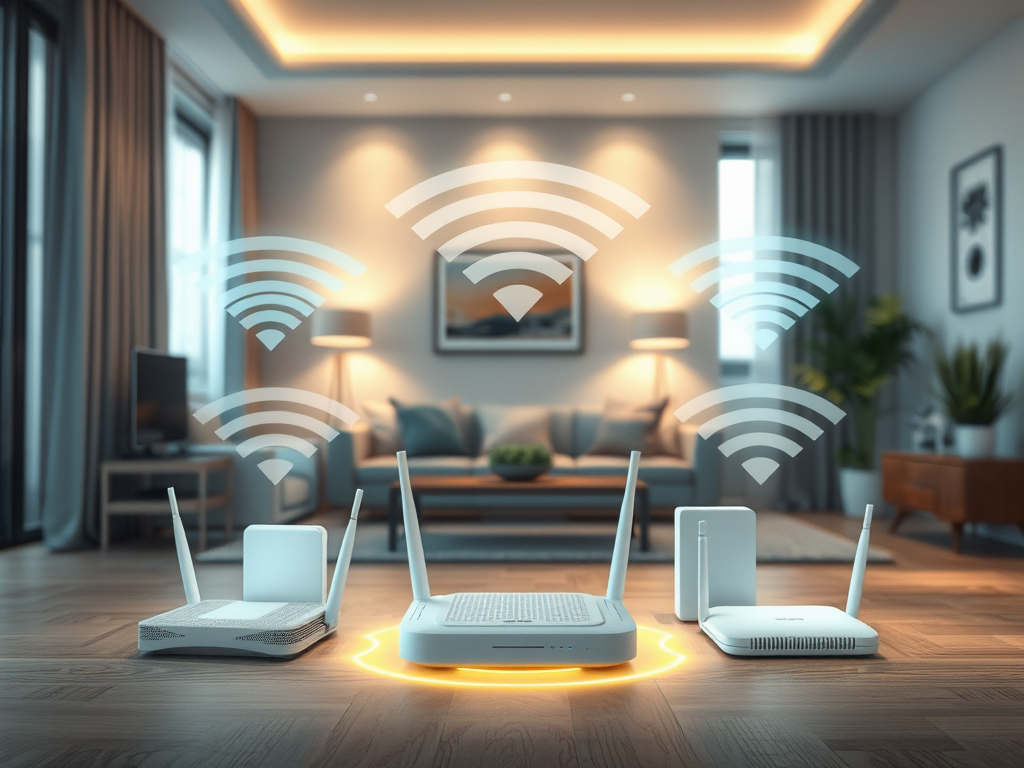
- Limited Range:
- WiFi signals typically have a range of about 150 feet indoors and 300 feet outdoors. Physical obstacles like walls and furniture can further reduce this range.
- Case Study: A study conducted by the Federal Communications Commission (FCC) found that urban environments with dense buildings often lead to significant signal degradation. This has prompted businesses to invest in mesh networks to extend coverage, showing that maximizing WiFi infrastructure can address reach limitations.
- Interference Issues:
- WiFi operates on different frequencies (2.4 GHz and 5 GHz). The 2.4 GHz band is prone to interference from devices like microwaves and Bluetooth devices.
- Example: In office settings, employees reported slow internet speeds when multiple devices operated simultaneously on the same frequency. Businesses have adopted dual-band routers to alleviate congestion, demonstrating the importance of selecting the right technology for optimal performance.
- Bandwidth Limitations:
- The bandwidth available can become congested with multiple devices connected to the same network, slowing down performance for each user.
- Case Study: A university noted a significant decrease in network performance during remote learning phases. As a result, they implemented network management systems that prioritize bandwidth for educational use, enhancing the online learning experience.
- Security Vulnerabilities:
- WiFi networks can be susceptible to unauthorized access and attacks if not properly secured, making data transmission potentially risky.
- Example: A public WiFi network at a café faced a security breach, resulting in compromised user data. This highlighted the need for businesses to utilize virtual private networks (VPNs) for secure connections.
- Dependence on Power Sources:
- WiFi devices and routers need a stable power supply. Power outages can disrupt access, emphasizing the need for backup solutions.
- Case Study: A global retailer experienced network failures during a power outage, affecting operations. They installed uninterruptible power supplies (UPS) to maintain WiFi access during such events, ensuring business continuity.
Conclusion
The limitations of WiFi present both challenges and opportunities for improvement. Companies and individuals alike need to assess how their environments and usage patterns affect their connectivity. Reflecting on your own WiFi needs can inspire changes that enhance your daily life—whether it’s upgrading your router, considering a mesh network for larger spaces, or utilizing VPNs for security.
Engaging with your network’s potential can lead to better performance and a more seamless experience, ultimately catering to your unique technology demands. Consider where your WiFi can be improved, and take actionable steps toward enhanced connectivity.
Discover more from Archer IT Solutons
Subscribe to get the latest posts sent to your email.


No responses yet