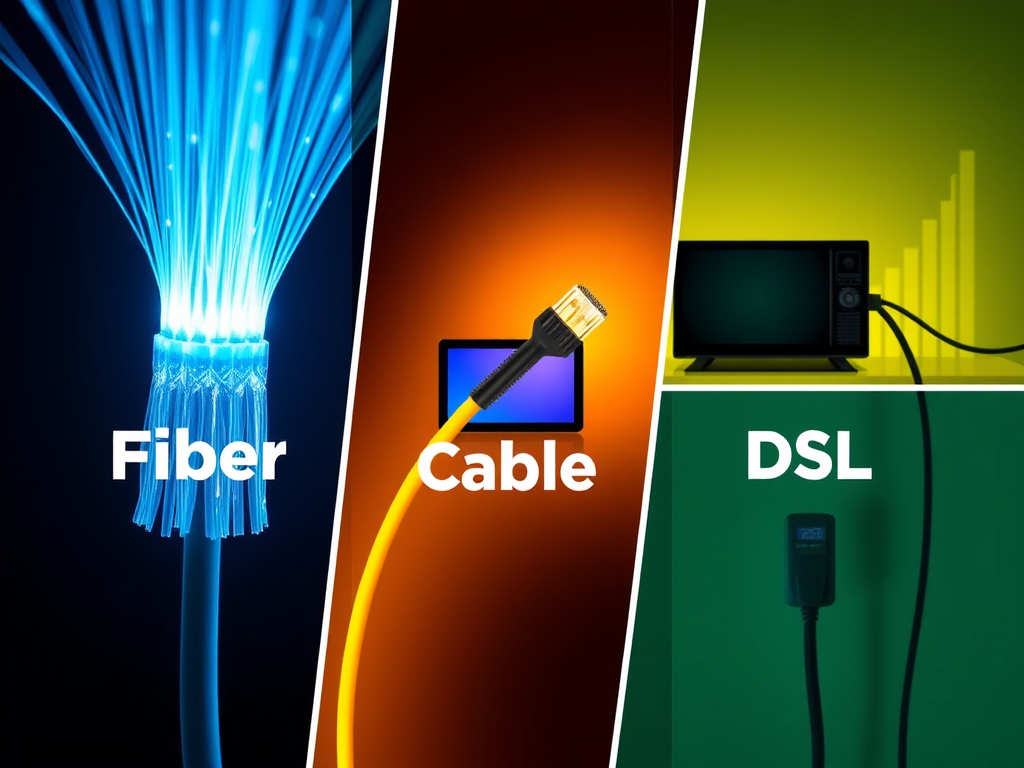
In today’s digital landscape, choosing the right internet connection type can dramatically affect productivity, entertainment, and communication. Whether for remote work, streaming, or gaming, understanding how common technologies like Fiber, Cable, and DSL differ is crucial. Each offers its own strengths and limitations based on speed, reliability, and availability. This article explores how these connections work and how they perform in real-world scenarios to help you decide which one might best suit your needs.
Exploring How Fiber, Cable, and DSL Connections Differ
Fiber-optic internet uses strands of glass or plastic fibers to transmit data as light signals, enabling lightning-fast speeds and extremely low latency. It’s often considered the gold standard for high-performance internet, with speeds reaching up to 10 Gbps in some areas. According to the Federal Communications Commission (FCC), fiber delivers average download speeds more than three times faster than cable connections in urban centers. However, installation can be limited to areas where fiber infrastructure has been deployed.
Cable internet, on the other hand, operates through the same coaxial cables used for cable television. While it can’t match fiber’s peak performance, it still offers considerable speed and wide availability, often achieving 300 Mbps to 1 Gbps in many regions. The main drawback lies in shared bandwidth; speeds can fluctuate during high-traffic periods, as multiple households share the same network segment. For suburban and urban areas, cable remains a popular “middle-ground” option between performance and cost.
DSL (Digital Subscriber Line) connections use standard telephone lines but transmit digital data rather than voice signals. DSL technology is widely accessible, even in rural areas, but typically offers slower speeds, ranging from 1 Mbps to 100 Mbps depending on distance from the service provider’s central office. It’s well-suited for light internet tasks such as web browsing and email but may struggle with high-definition streaming or gaming. For many small towns, DSL remains an important bridge technology where newer infrastructure has yet to arrive.
Real-Life Examples Highlighting Speed and Reliability
In real-world use, the difference between connection types becomes more visible. For example, a small marketing agency in Austin, Texas transitioned from cable to fiber internet through a provider like AT&T Fiber. The result was not just faster upload speeds for video content creation but also improved reliability during simultaneous cloud-based collaborations. This shift boosted productivity and client satisfaction.
Meanwhile, a family in a rural Montana community continues to rely on DSL from CenturyLink. While not blazing fast, it provides stable connectivity for remote schooling, Zoom meetings, and modest streaming needs when fiber networks aren’t available. The trade-off in speed is balanced by the benefit of having consistent access in an otherwise underserved region.
Comparatively, a New York City apartment complex offering both cable internet from Spectrum and fiber connectivity from Verizon Fios shows how bandwidth competition impacts consumer experience. Residents who switch to fiber often report a 50% reduction in dropped video calls and faster uploads to cloud storage platforms. These cases highlight that reliability often matters as much as raw speed, especially in environments with multiple concurrent users.
Key Takeaways:
- Fiber: Fastest speeds, reliable but with limited availability.
- Cable: Widely available, good performance, but shared bandwidth issues.
- DSL: Broad accessibility, affordable, but slower and distance-sensitive.

While all three technologies—Fiber, Cable, and DSL—can deliver quality internet experiences, the best choice depends on your specific needs and location. Fiber offers the highest performance, ideal for gamers, creators, and large households. Cable balances affordability and speed with extensive coverage, while DSL ensures essential connectivity even in remote areas.
Before deciding, evaluate not just advertised speeds but also the consistency of service and infrastructure availability in your region. Check with local ISPs and online coverage maps to compare options. As digital demands continue to grow, understanding connection types empowers you to choose the service that best aligns with your lifestyle and ensures a smooth, reliable online experience.
Discover more from Archer IT Solutons
Subscribe to get the latest posts sent to your email.


No responses yet