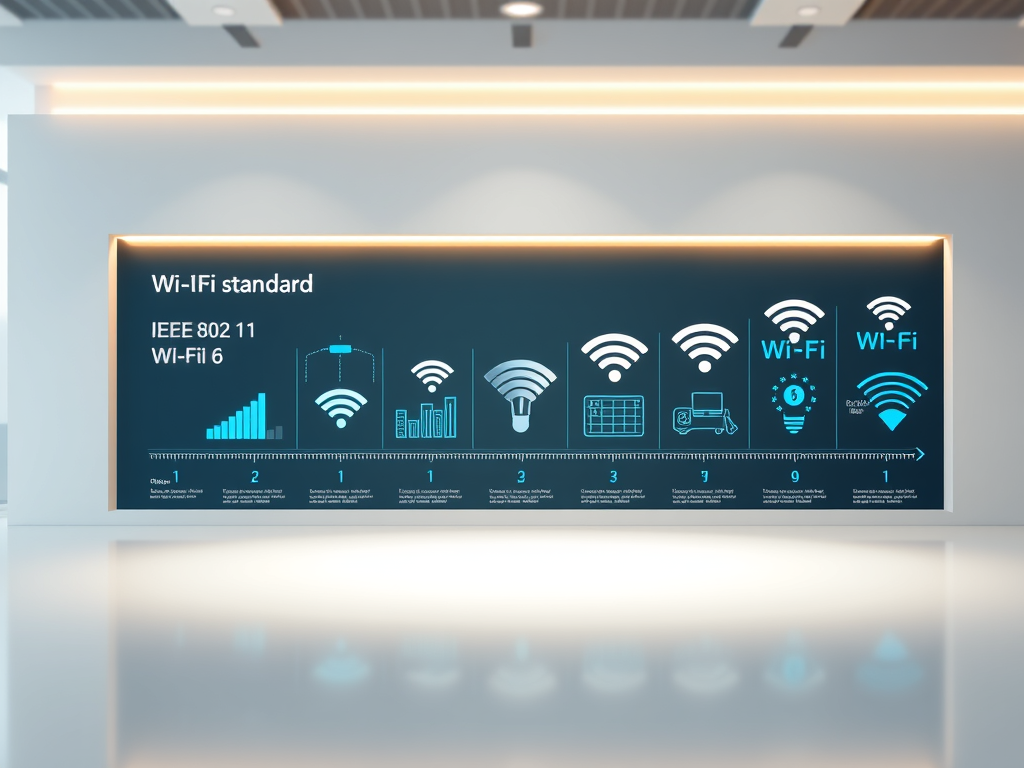
The Evolution of Wi-Fi Standards Over Time
Wi-Fi technology has undergone significant transformations since its inception, evolving through various standards to meet the growing demands for faster and more reliable wireless connectivity. The journey began with the IEEE 802.11 standard, introduced in 1997, which laid the foundation for wireless networking. This initial standard offered a maximum data rate of 2 Mbps, which was sufficient for basic internet browsing and email. However, as the internet became more integral to daily life, the need for higher speeds and better performance led to the development of subsequent standards.
Over the years, Wi-Fi standards have progressed through several iterations, each bringing improvements in speed, range, and efficiency. The introduction of 802.11b in 1999 marked a significant leap, offering speeds up to 11 Mbps. This was followed by 802.11g in 2003, which increased speeds to 54 Mbps. The 802.11n standard, released in 2009, further enhanced performance with speeds up to 600 Mbps and improved range through the use of multiple-input multiple-output (MIMO) technology. Each new standard has built upon the previous ones, addressing the limitations and expanding the capabilities of Wi-Fi networks to support the ever-increasing demand for wireless connectivity.
How Wi-Fi Standards Enhance Connectivity
Wi-Fi standards play a crucial role in enhancing connectivity by providing a framework for interoperability and performance improvements. These standards ensure that devices from different manufacturers can communicate effectively, fostering a seamless user experience. By adhering to a common set of protocols, Wi-Fi standards enable devices to connect to networks effortlessly, regardless of the brand or model. This interoperability is essential in a world where users expect to connect multiple devices to the internet without compatibility issues.
Moreover, Wi-Fi standards enhance connectivity by continuously improving data transfer rates and network efficiency. Each new standard introduces advancements that optimize the use of available spectrum, reduce interference, and increase the number of devices that can connect simultaneously. For instance, the introduction of technologies like beamforming and MU-MIMO (multi-user, multiple-input, multiple-output) in recent standards has significantly improved the ability of Wi-Fi networks to handle multiple connections at once, ensuring stable and fast connectivity even in crowded environments. These enhancements are vital for supporting the growing number of connected devices and the increasing demand for high-bandwidth applications such as streaming and online gaming.
Understanding Wi-Fi 6 and Its Advantages
Wi-Fi 6, also known as 802.11ax, represents the latest advancement in Wi-Fi technology, designed to address the challenges of modern connectivity demands. One of the key advantages of Wi-Fi 6 is its ability to provide faster data transfer rates, with theoretical speeds reaching up to 9.6 Gbps. This is achieved through the use of advanced technologies such as Orthogonal Frequency Division Multiple Access (OFDMA) and 1024-QAM, which increase the efficiency of data transmission and allow more data to be packed into each signal.
In addition to speed, Wi-Fi 6 offers significant improvements in network capacity and efficiency. It is designed to perform better in environments with a high density of connected devices, such as airports, stadiums, and smart homes. The introduction of Target Wake Time (TWT) technology also enhances battery life for connected devices by scheduling communication times, reducing the need for constant power consumption. These advantages make Wi-Fi 6 an ideal choice for supporting the growing number of IoT devices and ensuring a seamless user experience in increasingly connected environments.
The Role of Wi-Fi Standards in Smart Homes
Wi-Fi standards are integral to the functioning of smart homes, where a multitude of devices need to communicate seamlessly to provide a cohesive user experience. In a smart home, devices such as smart speakers, thermostats, security cameras, and lighting systems rely on Wi-Fi connectivity to interact with each other and with users. The interoperability ensured by Wi-Fi standards allows these devices to connect to a central network, enabling users to control and monitor their home environment remotely through smartphones or voice commands.
Furthermore, the advancements in Wi-Fi standards have made it possible to support the increasing number of devices found in smart homes without compromising performance. Technologies like MU-MIMO and beamforming, introduced in recent Wi-Fi standards, enhance the ability of networks to handle multiple simultaneous connections, ensuring that all devices receive the necessary bandwidth for optimal performance. This is particularly important in smart homes, where the demand for reliable and fast connectivity is high, as users expect instant responses from their devices and seamless integration of various smart systems.
Wi-Fi Standards: Bridging the Digital Divide
Wi-Fi standards play a pivotal role in bridging the digital divide by providing affordable and accessible internet connectivity to underserved communities. In many regions, deploying traditional wired infrastructure is cost-prohibitive, making wireless solutions a more viable option. Wi-Fi technology, with its relatively low deployment costs and ease of installation, offers a practical solution for extending internet access to remote and rural areas, where connectivity options are limited.
Moreover, the continuous evolution of Wi-Fi standards has made it possible to deliver high-speed internet access to a broader audience, helping to level the playing field in terms of digital opportunities. By enabling more people to connect to the internet, Wi-Fi standards contribute to closing the gap between those with access to digital resources and those without. This increased connectivity empowers individuals and communities by providing access to information, education, and economic opportunities, ultimately fostering social and economic development.
Security Improvements in Modern Wi-Fi Standards
Security is a critical aspect of Wi-Fi connectivity, and modern Wi-Fi standards have introduced several improvements to protect users from potential threats. One of the most significant advancements in this area is the introduction of WPA3 (Wi-Fi Protected Access 3), which enhances the security of wireless networks by providing stronger encryption and more robust authentication protocols. WPA3 addresses vulnerabilities found in previous security protocols, making it more difficult for attackers to intercept or manipulate data transmitted over Wi-Fi networks.
In addition to WPA3, modern Wi-Fi standards incorporate features such as Protected Management Frames (PMF) and Enhanced Open, which further enhance the security of wireless communications. PMF provides protection for management frames, preventing attackers from exploiting them to disrupt network operations. Enhanced Open, on the other hand, offers improved security for open networks by encrypting data even when a password is not required for access. These security improvements are essential for safeguarding user data and ensuring the integrity of wireless networks in an increasingly connected world.
Comparing Wi-Fi Standards: Speed and Range
When comparing Wi-Fi standards, speed and range are two of the most important factors to consider, as they directly impact the performance and usability of wireless networks. Each Wi-Fi standard offers different maximum data rates, with newer standards generally providing faster speeds. For example, while 802.11n offers speeds up to 600 Mbps, Wi-Fi 5 (802.11ac) can reach speeds of up to 3.5 Gbps, and Wi-Fi 6 (802.11ax) pushes this further to 9.6 Gbps. These improvements in speed are crucial for supporting high-bandwidth applications and ensuring a smooth user experience.
Range is another critical aspect of Wi-Fi standards, as it determines the coverage area of a wireless network. While earlier standards like 802.11b and 802.11g had limited range, advancements in technology have led to significant improvements in this area. Modern standards, such as Wi-Fi 6, utilize technologies like beamforming to extend the range and improve signal strength, even in challenging environments. This ensures that users can maintain a stable connection throughout their homes or offices, without experiencing dead zones or signal dropouts. By comparing the speed and range of different Wi-Fi standards, users can make informed decisions about which technology best suits their connectivity needs.
Future Trends in Wi-Fi Standards and Connectivity
The future of Wi-Fi standards and connectivity is poised for exciting developments, driven by the increasing demand for faster, more reliable, and more efficient wireless networks. One of the key trends is the ongoing evolution towards Wi-Fi 7, which promises to deliver even higher speeds and improved performance. Wi-Fi 7 is expected to introduce new technologies such as 320 MHz channel bandwidth and 4096-QAM, which will significantly enhance data transfer rates and network capacity, catering to the needs of bandwidth-intensive applications like virtual reality and 8K video streaming.
Another trend shaping the future of Wi-Fi is the integration of artificial intelligence (AI) and machine learning (ML) into network management. These technologies have the potential to optimize network performance by dynamically adjusting settings based on real-time data, improving efficiency, and reducing latency. Additionally, the expansion of Wi-Fi into new frequency bands, such as the 6 GHz band, will provide more spectrum for wireless communications, alleviating congestion and enabling more devices to connect simultaneously. As these trends continue to unfold, Wi-Fi standards will play a crucial role in shaping the future of connectivity, ensuring that wireless networks can meet the evolving demands of users and applications.
Discover more from Archer IT Solutons
Subscribe to get the latest posts sent to your email.


No responses yet