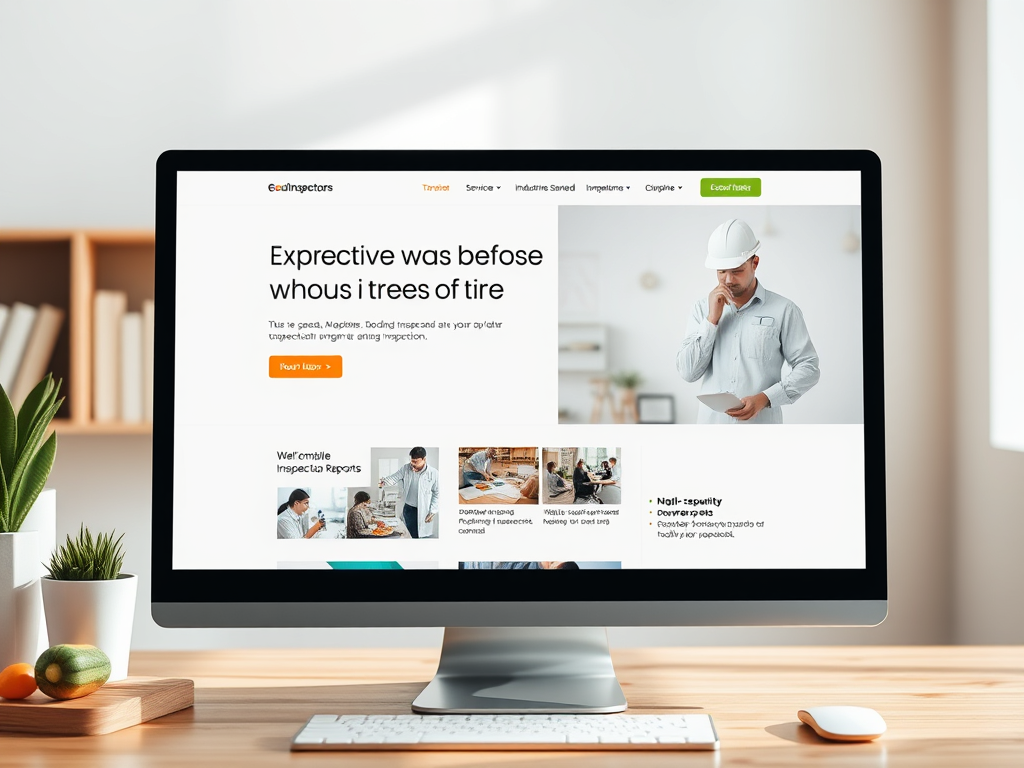
Choosing the Right Website Design for Food Inspectors
A professional online presence is no longer optional for service-based businesses — it’s essential. For a Food Inspector business, your website serves as both your digital portfolio and a source of trust for potential clients who rely on your expertise. From presenting certifications and inspection reports to offering online consultation tools, your website is the face of your business. The right design can make all the difference in credibility, usability, and lead generation. Let’s explore what kind of website structure, design, and technical foundations a Food Inspector business should have to stand out in today’s competitive market.
For a Food Inspector business, the website should establish trust, professionalism, and transparency right from the homepage. Food safety and hygiene are serious subjects, and your site must reflect that sense of authority. The design should include clean lines, a white or muted color palette, and clear navigation. Visitors should immediately understand who you are, what your credentials are, and how they can contact you. A cluttered or outdated website not only risks losing clients but also potentially undermines confidence in your inspection quality.
A key starting point is to ensure your website is mobile-responsive. Roughly 57% of small-business website traffic comes from smartphones, meaning your potential clients could be checking inspection availability or reading reports on the go. Responsive design ensures that images, tables, and forms display clearly across screens. This feature also affects your ranking on Google, as mobile-friendly pages earn prioritization in search results. A responsive layout not only enhances user experience but demonstrates adaptability and modern professionalism — traits essential for businesses operating in regulated industries like food inspection.
Another core aspect is usability for multiple audiences. Your website might cater to restaurant owners, manufacturing plant supervisors, food vendors at markets, and local authorities. Each will have distinct needs. For instance, a restaurant owner might seek routine inspection scheduling or sanitation certification, while a manufacturer might want detailed audit reports. Creating clear menu sections such as “Services,” “Industries Served,” and “Compliance Guidelines” helps different clients navigate easily. Incorporating infographics or icons for each service category ensures quick understanding even for first-time visitors.
The next consideration is clarity of information and visual communication. People usually judge a website’s credibility within 0.05 seconds of viewing it, according to Stanford’s web credibility research. High-quality photographs (e.g., inspectors at work, modern facilities, professional documentation) can reinforce authenticity. Avoid stock images that look generic — show genuine workplace scenes or even short video introductions about your inspection process. This makes visitors feel connected and confident in your professionalism.
Your homepage should also feature a concise introduction video or “Meet the Inspector” section that highlights your experience and certifications. For example, highlighting credentials such as “State-Licensed Food Safety Inspector – 10 Years of Experience in HACCP Compliance” not only adds authority but allows clients to compare your qualifications transparently. Remember that visuals should complement text rather than replace it — include accessible alt text for images and videos for better SEO and inclusivity.
Technically, even if you don’t have a web development background, you can rely on website builders like WordPress, Wix, or Squarespace that allow drag-and-drop functionality. These platforms offer customizable templates for professional service providers and require no coding knowledge. Still, hiring a web designer for specialized layouts can bring long-term consistency in branding. You might also need plugins or extensions for bookings, online payments, or report sharing — something we’ll explore in troubleshooting sections later.
From a branding perspective, the website should reflect your business ethos and inspection approach. Include your logo on all pages, a consistent color scheme, and short value statements such as “Ensuring Food Safety, One Inspection at a Time.” Incorporate testimonials or case studies that detail the impact of your inspections. For example, "XYZ Diner reduced compliance violations by 80% after routine assessments" provides measurable trust. When supported by real names (with client permission), testimonials not only add authenticity but boost SEO if the businesses link back to your site.
In terms of structure, aim for four to five foundational pages that cover all essential areas:
- Home – Overview and introduction.
- About/Certifications – Your professional story, licensing info, and industry affiliations.
- Services – Detailed breakdowns of inspections, audits, and consultations.
- Resources – Downloadable guides, FAQs, and hygiene compliance updates.
- Contact – Inquiry forms, business hours, and social media links.
Such organization keeps navigation logical and user-friendly. Once you have these sections built, you can expand the site with specialized tools such as an “Inspection Booking Portal” or a “Compliance Tips Blog.” A blog helps not just with SEO but also in positioning your business as a thought leader in the food safety domain — sharing industry changes, contamination prevention advice, or government regulation updates can establish authority and trustworthiness.
When deciding what features to integrate, think about automation and convenience. Clients expect efficiency. Installing a booking system plugin can simplify inspection scheduling by letting restaurants book inspection slots directly. Systems like “Bookly” for WordPress integrate with Google Calendar and send automatic confirmations. You could also include a secure login area for frequent clients to view inspection history or generate compliance certificates.
Let’s consider an example: A mid-sized inspection company named SafeServe Inspections upgraded from a static brochure site to a dynamic portal. By adding automated form submissions, live chat, and report downloads, they saw a 47% increase in client retention in six months. Automated systems minimized back-and-forth emails and allowed clients to track results securely, demonstrating how simple website features can directly impact profits and satisfaction.
But be mindful — each additional feature comes with plugin compatibility challenges. For instance, booking systems may not integrate seamlessly with older themes. Regular updates and backups are necessary. If your WordPress plugin conflicts with another, disable them one by one to isolate the issue, or consult your host’s logs for PHP error messages. Maintaining compatibility between plugins, especially for inspection report generators and payment gateways, prevents downtime and protects client data integrity.
Plugins bring major advantages but can also cause technical pitfalls if not managed properly. Common issues include slow loading times, broken display layouts, or incompatible theme updates. For instance, SEO plugins like Yoast may conflict with caching plugins if not configured properly. As a preventive measure, always test plugins in a staging environment before going live.
When troubleshooting, it helps to use simple diagnostic steps:
- Backup your entire site.
- Deactivate all plugins, then reactivate them one by one to locate the problem.
- Check Error Logs available through your hosting provider’s control panel.
- Clear Cache and verify front-end results on both desktop and mobile devices.
- Consult Developer Forums or plugin documentation — the support community is often quick to assist.
The good news is that most established platforms now release updates frequently to fix compatibility problems. As of 2024, over 60% of small service businesses use WordPress precisely because of its large support ecosystem. With ongoing maintenance, even non-technical owners can keep their sites running smoothly without major issues.
Real-Life Examples and Key Features for Lasting Impact
Real-life case studies highlight how effective websites enhance Food Inspector operations. Consider CleanCheck Audit Services (fictitious example). Before they rebuilt their site, clients often complained about unclear certification information and inaccessible inspection reports. Post-redesign, the business added password-protected dashboards and digital invoicing options. Within two quarters, not only did inquiry numbers increase by 35%, but overall report processing time dropped by nearly half. A well-designed website can improve both client acquisition and internal workflow efficiency.
Another example involves a single independent inspector, Laura’s Food Compliance, who used WordPress with embedded calendars, service updates, and multilingual support. Because she inspected international supply chains, translation and accessibility tools became vital. After optimizing for mobile and adding case studies about past audits, 40% of her new clients cited her website’s professionalism as a deciding factor in hiring her. A user-friendly website not only supports local visibility but serves as a digital ambassador for credibility and competence.
In large-scale institutions, integrated platforms can go even further. A national-level inspector consortium might include client portals linked to government compliance APIs, enabling clients to verify local inspection databases instantly. Though this requires higher technical investment, it’s an innovation demonstrating how data integration transforms user experience. Such systems reduce administrative workload, minimize paper use, and foster transparency — all of which are core values for regulatory industries.
Key Features That Drive Long-Term Impact should balance user friendliness, visual clarity, and operational strength. Here are some must-haves tailored to Food Inspectors:
- SSL Certificates: Essential for client data security.
- Clear Navigation Menus: Logical and responsive across devices.
- Inspection Booking Forms: Streamlined modules for scheduling.
- Report Upload Area: Secure, encrypted space for sharing documents.
- Google Maps Integration: Display your service radius efficiently.
- Compliance Blog/Updates: Drives organic SEO and community trust.
- Live Chat or AI-assisted Support: Offers immediate client engagement.
From a technical side, these features should run smoothly together through consistent updates. Pros include improved client retention, automated record tracking, and stronger reputation management. On the downside, high-dependency plugins can lead to security vulnerabilities if neglected, and frequent updates may require hands-on monitoring. A strong web host with good uptime and support can mitigate most of these concerns.
Furthermore, accessibility should not be overlooked. Adhering to WCAG (Web Content Accessibility Guidelines) ensures your content is usable by people with disabilities. This might mean using high-contrast colors, text alternatives for all images, and ensuring full keyboard navigation. Accessibility not only ensures inclusivity but aligns with ethical standards that parallel the food safety industry’s principles of responsibility and fairness.
Another key area to highlight is ongoing performance analysis. Understanding analytics data such as session duration, bounce rate, and conversion percentage helps identify visitor behavior trends. Google Analytics or Matomo can help track which service pages generate the most inquiries, allowing you to tailor future content to align with user needs. Data reveals whether clients are leaving after viewing your “About” section or staying to explore booking options.
For example, if analytics show that mobile visitors tend to exit before completing forms, your form layout may need simplification or shorter entry fields. Statistics show that reducing web form fields from 11 to 4 increases conversion rates by around 120%. For service-based businesses like food inspections, streamlined conversion funnels translate directly into more appointment bookings.
Make sure your site is designed for scalability — as your business grows, you might need to support multiple inspectors, wider coverage areas, or language localization. Modular website architecture allows new features to be plugged in without redesigning from scratch. This foundational foresight ensures longevity and user satisfaction while controlling long-term costs.
Building an exceptional Food Inspector business website is about more than just digital presence — it’s about embodying your brand’s core values of precision, safety, and trust. The right website can automate routine operations, educate your audience, and strengthen your reputation across both clients and regulatory agencies. If you take the time to plan structure, usability, and plugin compatibility from the start, your site will not just inform visitors — it will actively support and expand your business.
Take a step back and reflect: does your current site truly represent your expertise and attention to detail? If not, it might be time for a redesign or feature update. Whether you’re a solo inspector or managing a multi-location team, an optimized and secure website is an investment in both credibility and future growth. Begin today — one strategic upgrade at a time — and let your digital presence work as effectively as your on-site inspections.
Fast, Reliable Web Hosting — Starting at $1.99/month
|
🔥 Most Popular Standard Plan | Domain Only | |
|
$1.99/month Limited-time offer | Secure your business name online | |
|
Affordable yearly pricing Easy setup Works with any hosting | |
Reseller Hosting (For Agencies & Developers)Start your own hosting business or manage client sites | ||
| Reseller 1 | Reseller 2 | Reseller 3 |
| $20/month | $37.50/month | $50/month |
|
|
|
| ✔ 99.9% uptime • ✔ Secure • ✔ Easy setup • ✔ Local support | ||
Stop settling for slow, unreliable hosting. With Archer IT Solutions, get a website hosting plans that deliver speed, security, and 99.9% uptime guarantee. Grab your domain and hosting package in one seamless plan, optimized for WordPress users, small and medium size businesses, and personal websites.
Enjoy affordable web hosting plans without compromises unlike the big guys. Complete with professional email, one-click CMS installs, and round-the-clock hosting support. Perfect for WordPress users.
Built for Real Businesses
Whether you’re launching your first blog or scaling a growing business, Archer IT gives you:
+ Speed that keeps visitors engaged
+ Reliability you can count on
+Tools that actually make sense
Launch your first personal blog or scale a growing small business site with hosting optimized for performance. Get the best web hosting for plus simple setup — all powered by secure Linux servers and easy Plesk control panel.
Why Choose Archer IT Hosting?
🔒 Free SSL Certificates (Security + SEO Boost)
📧 Professional Email Accounts Included
⚡ Fast Linux Servers (Optimized Performance)
🧩 One-Click WordPress, Joomla & Drupal Installs
💬 Real 24/7 Support — No Bots, Just Help
💾 Automatic Backups for Peace of Mind
Risk-Free Guarantee
Try it with confidence.
If it’s not right for you, get your money back within 15 days.🔥 Don’t Wait — Launch Your Website Today
Stop overpaying for slow hosting.
Get everything you need in one simple plan.
Your website stays online with uptime, protected by a free SSL certificate, and supported by real people around the clock. And if it’s not right for you? Our 15-day money-back guarantee makes it a no-risk choice. Take your business or personal project online with hosting that’s secure, affordable, and built to perform.
💬 Real Support. No Runaround.
Unlike big hosting companies, you get:
- Direct help from real people
- No ticket delays
- No upsell traps
Discover more from Archer IT Solutons
Subscribe to get the latest posts sent to your email.
Discover more from Archer IT Solutons
Subscribe to get the latest posts sent to your email.


No responses yet