Latest Comments

Discover how Wi-Fi technology revolutionizes connectivity with seamless wireless access, enhancing mobility, flexibility, and convenience in everyday life.

Benefits of Wi-Fi Technology Wi-Fi technology enables wireless connectivity, allowing devices such as computers, smartphones, tablets, and smart home appliances to communicate with each other[…]

What are routers?

Understanding Routers: Key Devices for Modern Data Communication Routers are essential devices in modern networking that facilitate the transfer of data packets between different computer[…]

SHF Wavelengths Explained: Key Insights for Communications

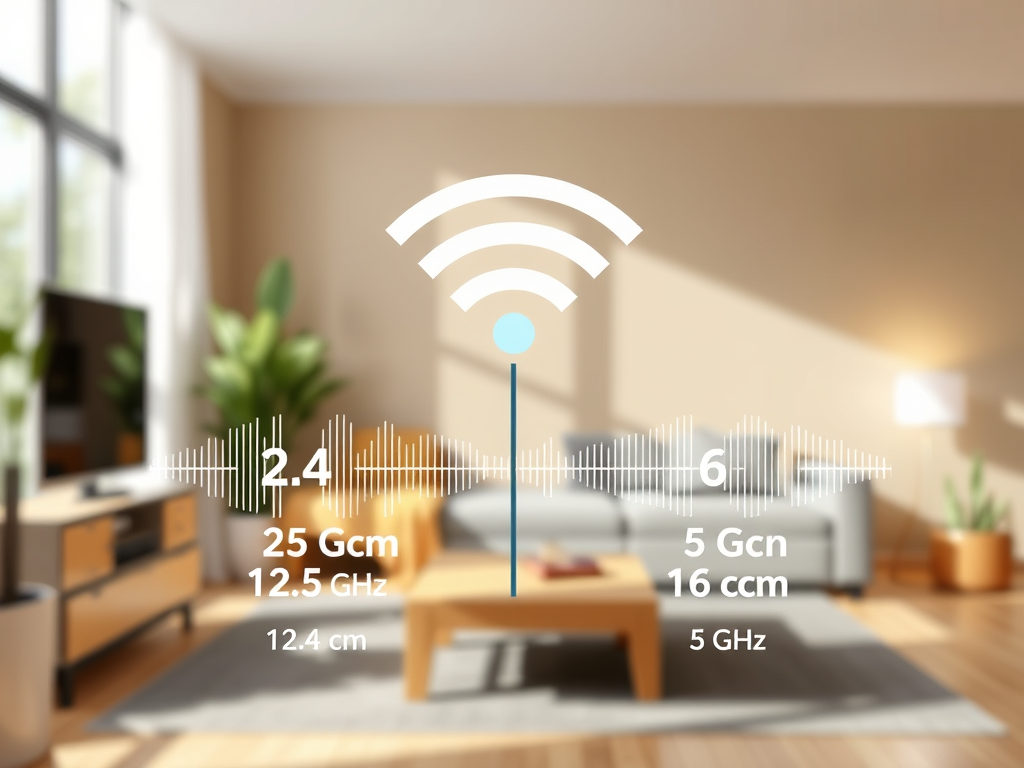
Super High-Frequency (SHF) transmissions, operating between 3 GHz and 30 GHz, have wavelengths ranging from 1 to 10 centimeters. This understanding is essential for the[…]

How to Strengthen Your Home Wi-Fi Security

To secure your home Wi-Fi network, change default admin credentials, enable WPA3 encryption, create a guest network, disable WPS, and rename your SSID. Regularly update[…]

Understanding SIP: Key Components for Real-Time Communication

The Session Initiation Protocol (SIP) is essential for real-time communication, managing sessions in voice and video calls. Key components include User Agents (initiating and responding[…]

Understanding WiMAX Throughput Rates

WiMAX throughput varies based on network configuration, frequency, and users. Fixed WiMAX can achieve up to 70 Mbps under ideal conditions, while Mobile WiMAX typically[…]

Understanding Wi-Fi Speed: A Guide to Standards

Wi-Fi data transfer speeds vary by standards and conditions. Key standards include 802.11b (11 Mbps), 802.11g (54 Mbps), 802.11n (600 Mbps), 802.11ac (1.3 Gbps), and[…]

Benefits of Wi-Fi in Low-Density Areas

Wi-Fi in low-density areas offers enhanced connectivity and cost-effective solutions for internet access, benefiting residents and businesses alike. It promotes economic growth, improves education opportunities,[…]

Understanding the IEEE 802.16d Standard: WiMAX Range Explained

The IEEE 802.16d standard, or WiMAX, offers a maximum range of 30 miles (48 kilometers) in ideal line-of-sight conditions. In non-line-of-sight situations, the range decreases[…]

Understanding WPA: TKIP vs AES/CCMP Security

WPA (Wi-Fi Protected Access) personal mode primarily uses the Temporal Key Integrity Protocol (TKIP) for encrypting data. However, it is important to note that WPA[…]

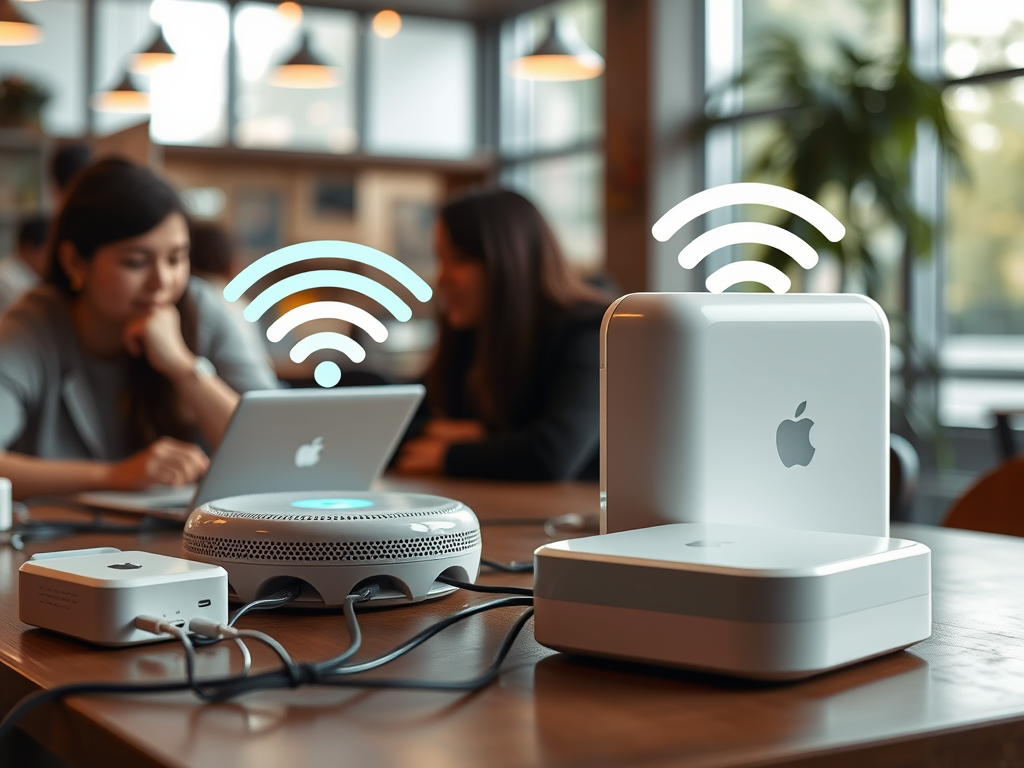
Examples of the WI-FI devices

These examples represent common hardware components and devices that conform to standard Wi-Fi specifications, facilitating wireless communication across diverse environments.

The maximum length of an Ethernet cable?

The maximum length of an Ethernet cable depends on the type of cable and the network specifications. For standard twisted-pair Ethernet cables, such as Cat5e[…]

Understanding OFDM and MIMO in Wireless Communication

OFDM (Orthogonal Frequency Division Multiplexing) is a digital modulation technique that improves data transmission over various channels by splitting streams into sub-streams sent over different[…]

The Birth of Wi-Fi: A 1997 Milestone in Wireless Networking

Wi-Fi was created in 1997 when the Institute of Electrical and Electronics Engineers (IEEE) established the 802.11 standards for wireless networking, which laid the foundation[…]

Key Requirements for a Successful MVP

An effective Minimum Viable Product (MVP) requires core functionality focused on solving user problems, user-centric design for ease of use, a feedback mechanism for insights,[…]

Understanding Network Address Translation (NAT)

NAT, or Network Address Translation, allows multiple devices on a local network to share a single public IP address, conserving IP addresses and enhancing security.[…]

Signs Your Computer Needs an Upgrade

Signs that your computer may require an upgrade include slow performance, frequent crashes, software incompatibility, insufficient RAM, outdated hardware, overheating, limited storage space, graphical issues,[…]

Benefits of Multi-Language IT Support

Having multi-language IT support can be beneficial depending on your organization’s needs. Here are a few reasons to consider: Evaluating the demographics of your users[…]

Can Your Wi-Fi Be Accessed Remotely? Essential Tips

Wi-Fi networks can be accessed remotely under specific conditions, mainly due to poor security settings, such as weak passwords or outdated encryption methods. Additionally, routers[…]

How to Protect Your Wi-Fi: Top Security Measures

To secure your Wi-Fi network, change the default password, enable WPA3 or WPA2 encryption, disable SSID broadcasting, and implement MAC address filtering. Limit DHCP leases,[…]

Can I use a VPN on my home network?

Yes, using a VPN on your home network is possible by setting it up directly on your router, which ensures that all devices connected to[…]

Understanding Different Types of Internet Service Providers

There are various types of Internet Service Providers (ISPs) tailored to different user needs. Dial-Up ISPs connect via telephone lines, providing slower speeds for light[…]

Essential IT Functionality for Organizations

To identify necessary IT functionalities, focus on several key areas: infrastructure management (servers, storage, networking), security (firewalls, antivirus, encryption), software development (IDEs, version control), support[…]

Understanding Wi-Fi Technology and Its Key Components

Wi-Fi technology enables wireless communication over a local area network (LAN). Here’s a breakdown of how Wi-Fi works and its key components: What is Wi-Fi?[…]

Understanding LAN, WAN, MAN, PAN, and VPN Networks

This content outlines the advantages and disadvantages of five different network types: LAN, WAN, MAN, PAN, and VPN. LANs provide high speeds and cost-effectiveness but[…]