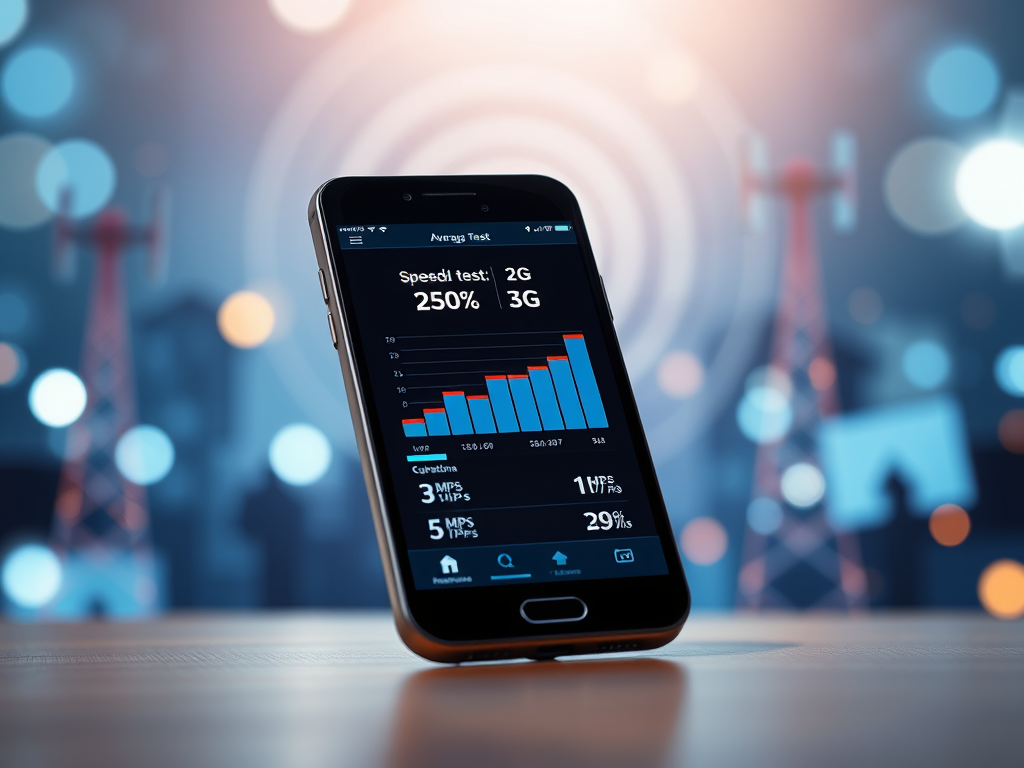
Understanding the Average 3G Network Throughput Today
In the evolution of mobile communication technologies, the third generation, or 3G, marked a major step forward from its predecessor 2G. It brought faster data transmission, multimedia capabilities, and paved the way for mobile internet access as we know it today. Despite the emergence of newer standards such as 4G and 5G, understanding the average throughput of 3G networks still provides insight into how wireless technologies have advanced over time.
The throughput of the wireless technology 3G is around a few megabits per second under optimal conditions. Typically, users experience download speeds ranging from 384 kbps up to about 2 Mbps, depending on the network implementation and signal strength. High-Speed Packet Access (HSPA), an enhancement of 3G, pushed these speeds even further, achieving peak rates of around 7.2 Mbps and beyond in ideal cases. This represented a significant improvement compared to early mobile data systems.
From a practical perspective, these speeds were sufficient for standard web browsing, email, and even early streaming services. However, as more bandwidth-heavy applications emerged, user expectations quickly outgrew what 3G could consistently deliver. This limitation drove the development and adoption of 4G LTE networks, which offered far higher throughput and lower latency. Even so, 3G networks continue to serve as reliable backup systems, particularly in regions where newer generations are not yet fully deployed.
Factors That Influence Real-World 3G Data Speeds
Despite theoretical throughput figures, real-world 3G performance varies considerably. One of the key factors influencing speed is signal strength. A user located close to a cell tower typically experiences higher throughput than someone at the edge of the coverage area. Physical obstructions such as buildings, terrain, and even weather conditions can interfere with signal quality, causing fluctuations in data speed.
Network congestion also plays an important role in determining actual throughput. When many users are connected to the same base station simultaneously, bandwidth must be shared among them. During peak usage hours, such as evenings, data rates can drop substantially due to limited resources. Additionally, network operators may implement traffic management policies that throttle certain types of data to ensure fair use across users, further impacting throughput.
Another factor includes the type of device and its compatibility with the 3G standard in use. Different versions of 3G, such as UMTS, HSPA, and HSPA+, support varying maximum speeds depending on hardware and software optimizations. Therefore, two users in the same location may experience different data rates based solely on their device capabilities. Understanding these factors helps explain why advertised speeds often differ from what users experience in practice.
While 3G technology is no longer considered cutting-edge, its throughput performance remains a cornerstone in the history of mobile communications. By offering data rates in the range of a few megabits per second, 3G enabled the first wave of truly mobile internet experiences. Examining its real-world performance and limitations provides valuable lessons for understanding how mobile networks evolve and what users can expect from future wireless generations.
Discover more from Archer IT Solutons
Subscribe to get the latest posts sent to your email.


No responses yet