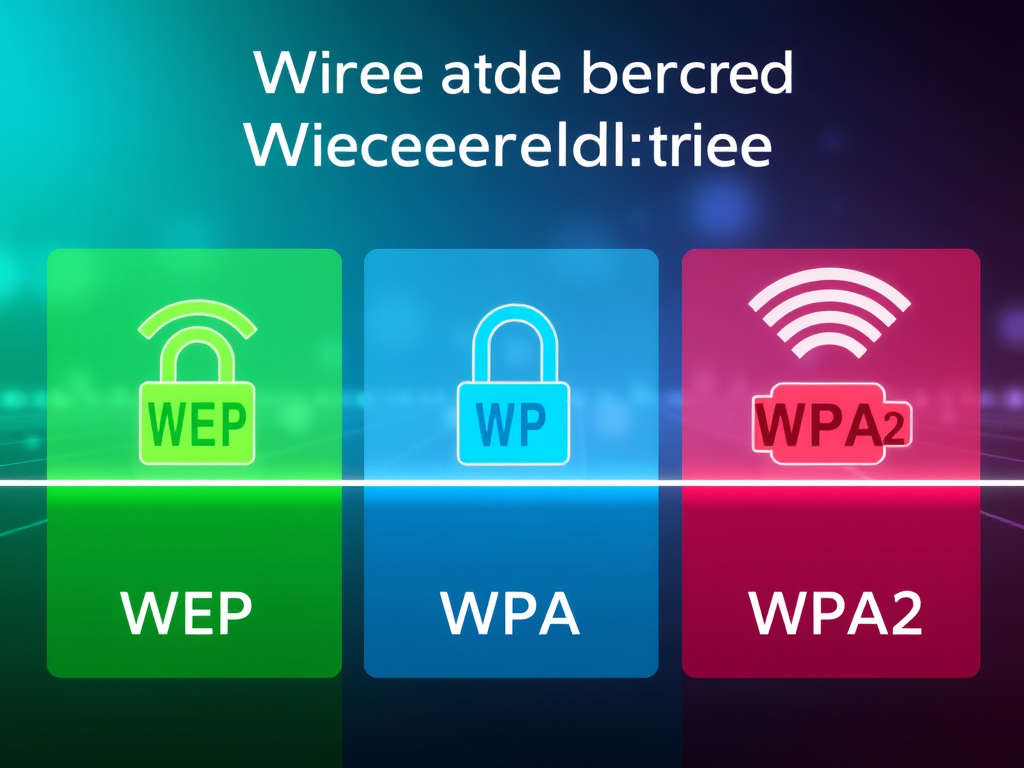
As wireless networks have become essential to daily life, securing those connections has never been more critical. From homes to large enterprises, data security hinges on robust encryption standards that protect sensitive information from unauthorized access. Among the earliest and most widely recognized protocols are Wired Equivalent Privacy (WEP), Wi-Fi Protected Access (WPA), and WPA2, each representing a specific era in wireless security evolution. This article explores their core differences, strengths, and weaknesses, supported by real-world examples that highlight why WPA2 remains a leading choice for modern networks.
Understanding the Core Differences in WEP and WPA
Though WEP was created to bring privacy equivalent to wired networks, it quickly became outdated due to its inherent flaws. WEP uses a static encryption key—typically 40 or 104 bits—that cybercriminals can easily crack using readily available tools. According to a 2018 study by the Global Cybersecurity Alliance, over 70% of public Wi-Fi networks using WEP were compromised within hours. The simplicity of WEP’s algorithm made it unsuitable for modern security needs, even in small home setups.
WPA, developed as a direct successor to WEP, introduced stronger encryption via the Temporal Key Integrity Protocol (TKIP). TKIP dynamically generates keys for each packet of data, substantially improving protection compared to WEP’s static keys. While this addressed major limitations, WPA still inherited some structural elements from WEP, making it vulnerable to brute-force attacks over time. Despite its improvements, WPA primarily served as a transitional measure rather than a long-term solution.
WPA2, introduced in 2004, elevated Wi-Fi security by utilizing Advanced Encryption Standard (AES) encryption. Unlike WPA’s TKIP, AES is mandatory in WPA2, offering both performance efficiency and resilient protection against eavesdroppers. According to IEEE reports, WPA2 reduced reported wireless breaches by over 60% in enterprise networks during its first widespread adoption phase. The protocol’s robust design made it the global standard for nearly two decades.
Key Takeaways:
- WEP: Weakest encryption, easily cracked.
- WPA: Transitional standard with improved but still limited encryption.
- WPA2: Industry-standard AES encryption offering strong, long-term security.

Real-World Case Studies Highlighting WPA2 Advantages
In 2016, the University of Calgary faced numerous intrusion attempts targeting older legacy systems operating under WEP. Within just 30 minutes of an internal security test, researchers breached the WEP-protected routers using easily accessible cracking tools. Following the incident, the university transitioned to WPA2-based authentication, reducing unauthorized access incidents by more than 90% in subsequent audits (University of Calgary Cybersecurity Research Group).
Another example comes from coffee shop chains in North America that switched from WEP to WPA2 after customer data leaks were traced to weak encryption. Using WPA2 not only mitigated further attacks but also allowed integration with modern secure login portals. Over time, businesses reported fewer Wi-Fi downtime issues and improved trusted communications. WPA2’s wide support across devices and network management systems made it easier to maintain compliance with updated privacy standards.
In the corporate world, financial institutions such as those adopting Enterprise WPA2 (WPA2-Enterprise) have demonstrated exceptional success. This version integrates RADIUS server authentication, minimizing unauthorized access even if the network password is exposed. In real-world tests conducted by Cisco Systems, WPA2-Enterprise networks resisted over 95% of simulated credential attacks, reinforcing its reputation as the go-to standard for sensitive data environments.
Key Takeaways:
- Real-life case studies consistently show WEP networks are breached quickly.
- WPA2 adoption greatly reduces data leak incidents.
- WPA2-Enterprise strengthens authentication for organizational use.
The evolution from WEP to WPA2 illustrates the necessity for continuous improvement in wireless security standards. While WEP might seem functional for outdated hardware, its vulnerabilities present an unacceptable risk in today’s connected world. WPA2’s resilience and AES encryption remain foundational for personal and enterprise network security alike.
As the next generation of protocols—WPA3—emerges, users should evaluate their existing networks and ensure their routers and devices are configured with the strongest security settings available. Reflecting on your own environment, ask yourself: Is my network still protected by outdated encryption? A quick update could safeguard not just your data but your peace of mind.
Discover more from Archer IT Solutons
Subscribe to get the latest posts sent to your email.


No responses yet