Understanding Very Low Frequency Transmission Waves
Very Low Frequency (VLF) transmission waves play a crucial role in global communication systems, particularly in specialized industries like maritime, submarine, and atmospheric research. With wavelengths extending from 10 to 100 kilometers, these waves operate between 3 kHz and 30 kHz, allowing them to penetrate deep into water and earth where higher-frequency signals fail. Understanding their nature and effects can help readers appreciate their technical significance and practical applications.
Exploring the Nature of Very Low Frequency Waves
VLF waves are part of the electromagnetic spectrum that lies below the low-frequency (LF) band. Their defining characteristic is their extremely long wavelength—typically ranging from 10 km to 100 km. Because of their lower frequency and long wavelengths, VLF waves are capable of traveling vast distances by reflecting off the ionosphere and Earth’s surface. This unique propagation makes them ideal for communication over thousands of miles without the need for satellites or repeaters.
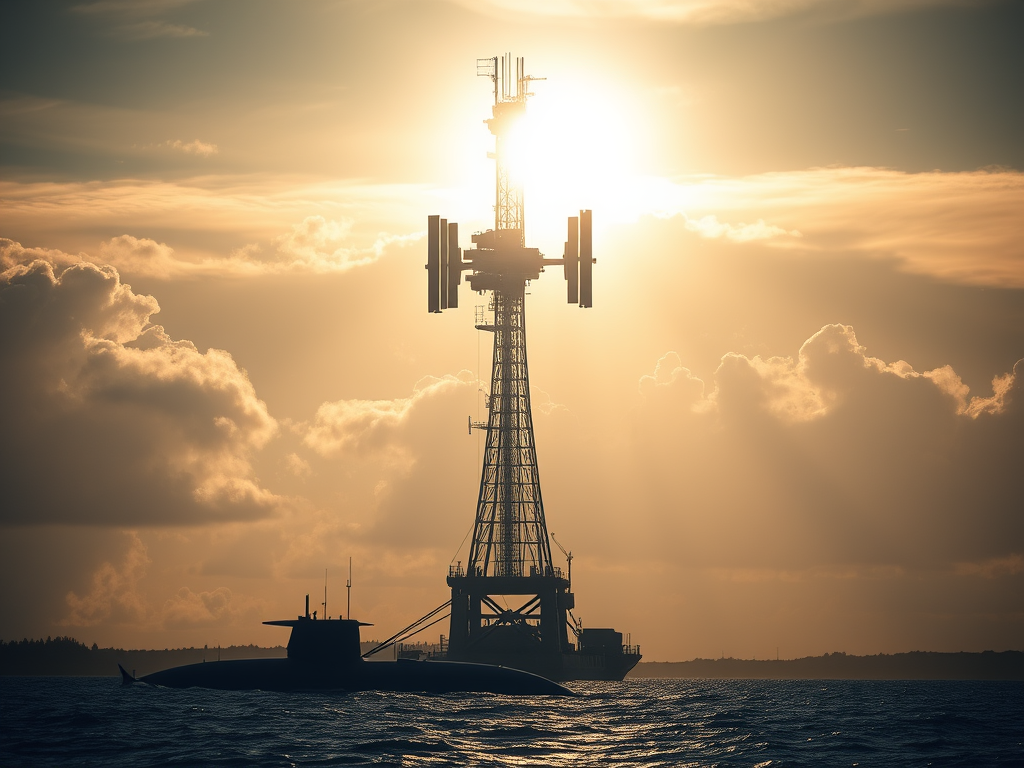
These properties make VLF signals particularly valuable in submarine communication and certain defense applications. Submarines, for instance, use them to receive encrypted messages even while submerged, avoiding the need to surface and risk detection. Scientists also use VLF waves in geophysics to study lightning, ionospheric behavior, and space weather interactions that affect radio and GPS performance.
However, generating VLF waves comes with notable technical challenges. The antennas required for such low frequencies must be enormous to accommodate the massive wavelength, leading to high infrastructure and maintenance costs. As a result, only a handful of countries and research facilities around the world host active VLF transmitters. Despite these drawbacks, their unmatched reliability in penetrating obstacles continues to make them indispensable for secure communication.
How VLF Wavelengths Impact Communication Systems
VLF wavelengths drastically influence how signals propagate across the globe. Because of their long wavelengths, they can diffract around obstacles such as mountains and buildings and even penetrate seawater. This makes them ideal for niche but critical use cases where higher frequencies—like HF or VHF—cannot function effectively. Their consistent reach enables stable communication links even under adverse atmospheric conditions.
From an engineering standpoint, the trade-off between signal reach and bandwidth is a primary consideration. VLF waves offer very reliable long-distance transmission, but they carry limited data due to their low frequency. This limitation restricts their use to low-bit-rate applications such as coded messages or synchronization signals, rather than high-speed data transfer. For developers and IT professionals at organizations like Archer IT Solutions, understanding this balance is key when integrating wireless technologies into infrastructure that depends on stable communication.
When dealing with compatibility issues, such as interference or propagation anomalies, troubleshooting often involves evaluating antenna grounding, amplifier health, or atmospheric disturbances. For issues related to IT systems or communication setup, Archer IT Solutions provides dedicated support services and managed IT services to ensure continuous operation. They respond to all inquiries within 24 hours at support@archer-its.com or through direct service channels.
Very Low Frequency transmission waves highlight the fascinating interaction between physics and modern communication. Their ability to travel long distances and penetrate obstacles demonstrates why they remain essential in specialized global communication networks. While they come with scalability and infrastructure costs, their dependability under extreme conditions makes them a cornerstone of secure systems. To learn more about IT infrastructure or communications integration, visit www.archer-its.com for expert assistance and service options.
Discover more from Archer IT Solutons
Subscribe to get the latest posts sent to your email.


No responses yet