Understanding the Wavelength of Very High Frequency Signals
Very High Frequency (VHF) signals are essential to many of today’s communication and broadcast systems, spanning radio, television, and navigation. Understanding their wavelength is vital because it directly influences performance, range, and signal clarity. In this article, we’ll explore how VHF signal wavelengths are measured, which factors determine their length, and how professionals can troubleshoot issues that affect VHF transmission quality.

Exploring How VHF Signal Wavelengths Are Measured
VHF signals fall within the range of 30 MHz to 300 MHz, corresponding to wavelengths between approximately 10 meters and 1 meter. The formula for calculating wavelength is simple:
Wavelength (λ) = Speed of Light (c) ÷ Frequency (f)
Since the speed of light in air is roughly 300,000,000 meters per second, the wavelength of a 100 MHz frequency, for example, would be 3 meters. This calculation shows why higher frequencies are associated with shorter wavelengths, which has implications for antenna design and propagation.
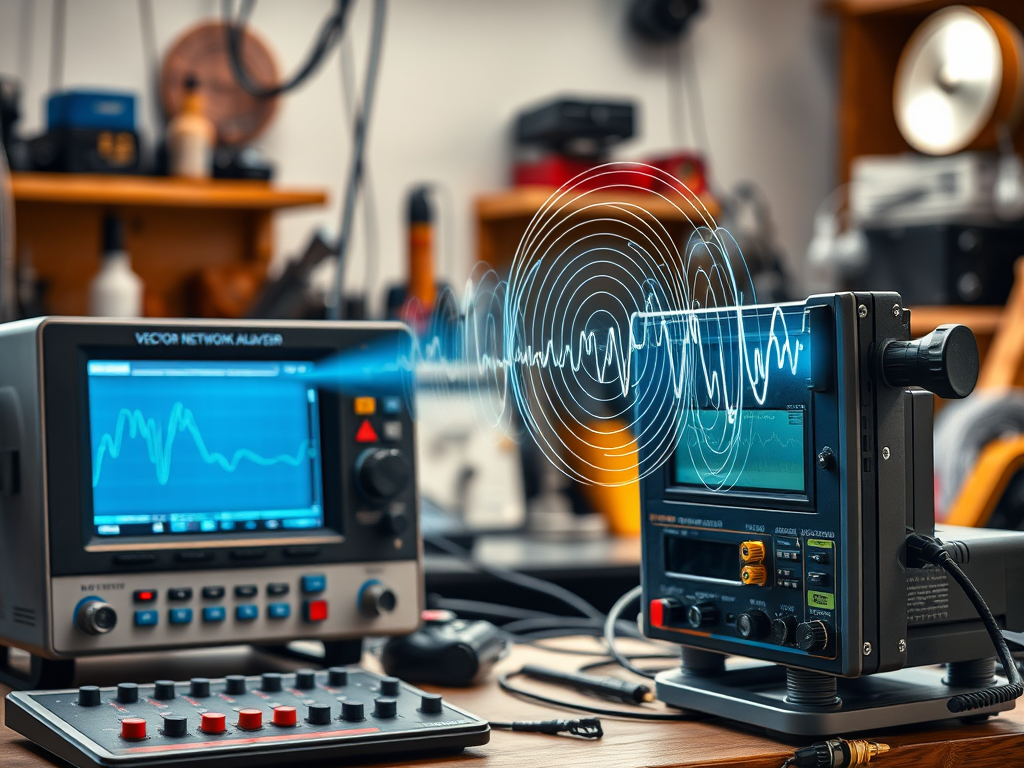
In practice, engineers use specialized instruments such as a vector network analyzer or frequency counter to measure signal characteristics. These tools assess how waves behave across various frequencies, ensuring that antenna systems are tuned precisely. For amateur radio operators and communication engineers alike, understanding this relationship helps maintain reliable signal performance.
Pros of Knowing VHF Wavelengths:
- Enables efficient antenna design
- Improves transmission range and reliability
- Enhances troubleshooting of interference issues
Cons:
- Requires specialized equipment to measure accurately
- Environmental conditions can distort findings
For in-depth physics references, visit NASA’s Radio Frequency Basics or IEEE Spectrum’s Guide to Radio Waves.
Factors That Influence the Length of VHF Wavelengths
While frequency primarily determines a wave’s length, several environmental and technical factors can alter how VHF signals behave. For example, temperature, humidity, and atmospheric pressure affect how radio waves travel through air. Lower frequencies can diffract around terrain more effectively, while higher ones penetrate the atmosphere differently, influencing the practical wavelength perception.
Another key influence is the conductivity and texture of nearby surfaces. Urban areas with numerous reflective materials can cause signals to scatter, effectively altering how the wavelength propagates. This phenomenon, known as multipath propagation, often leads to interference and signal fading. Adjusting antenna placement and height can minimize these disturbances and improve clarity.
From an engineering perspective, the antenna design must match or resonate closely with the wavelength of the transmitted signal. A mismatch can lead to poor performance or standing waves, which cause power losses. For instance, VHF marine radios operate within a specific wavelength zone that aligns with antennas about one-quarter to half a wavelength long. For optimization, review Ofcom’s Radio Spectrum Guidance or related studies by the FCC Spectrum Management Division.

Troubleshooting VHF Wavelength Issues
When signal reception is weak or distorted, it’s often linked to wavelength-related imbalances. Check antenna orientation and impedance matching first. An incorrectly tuned antenna can reflect signals rather than transmit them efficiently. Use an SWR meter (Standing Wave Ratio) to confirm setup accuracy.
Common Issues:
- Signal dropouts: Caused by obstructions or reflections.
- Interference: Often from overlapping frequencies or nearby electronics.
- Short wavelength mismatch: Incorrect antenna length or poor grounding.
For a structured diagnostic process, Archer IT Solutions offers remote and onsite IT support services to assess communication and signal-related hardware. Visit www.archer-its.com/onsite-service or open a support ticket via www.archer-its.com/ticket. For technical questions, email support@archer-its.com.
Understanding the wavelength of Very High Frequency signals is crucial for achieving clean, reliable communications. By measuring wavelengths correctly and recognizing environmental influences, users can optimize performance for radio, broadcast, and IT infrastructure systems. Whether tuning an antenna or resolving interference, attention to wavelength details ensures stability and efficiency. For further assistance, consider reaching out to Archer IT Solutions, your partner in network performance and managed IT services—helping small and medium-sized businesses maintain strong communication and connectivity.
Call to Action (CTA):
Explore how Archer IT Solutions can enhance your signal performance and IT infrastructure. Visit www.archer-its.com/managed-it-services for expert guidance.
Discover more from Archer IT Solutons
Subscribe to get the latest posts sent to your email.


No responses yet