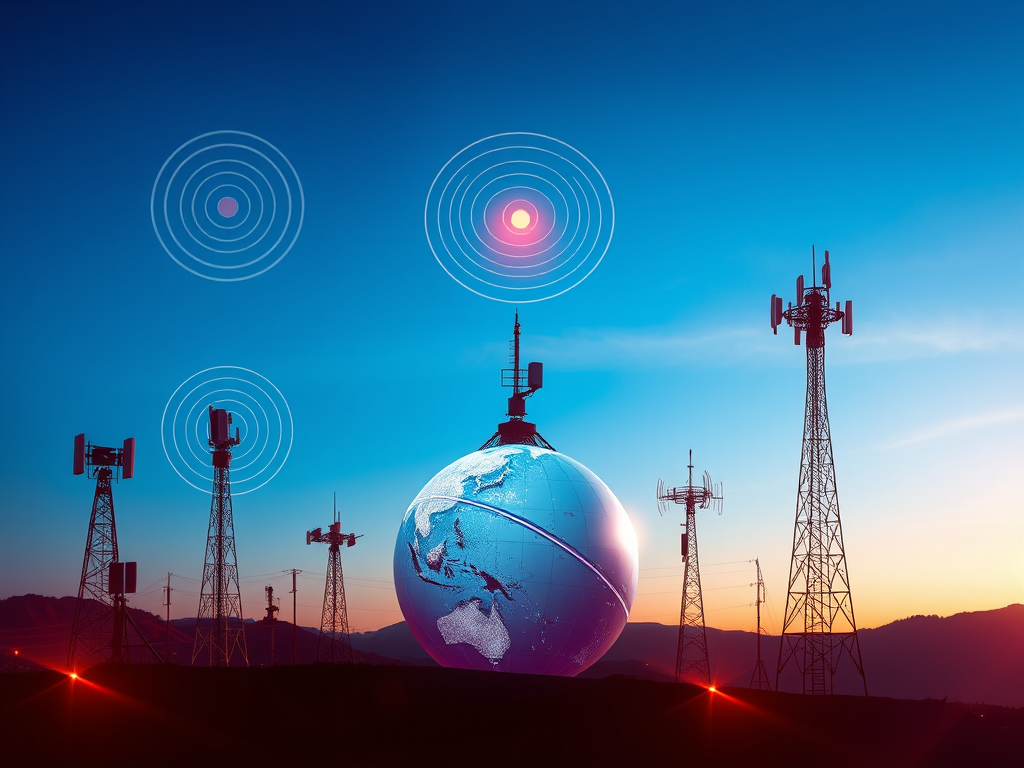
Understanding the Frequency Range of High Frequency Transmission
High Frequency (HF) transmission plays a vital role in modern communication systems — from global radio links to advanced telemetry. Understanding its frequency range and how it shapes the backbone of connectivity helps both engineers and IT managers make informed decisions about deploying or maintaining these systems. This guide breaks down the essentials, benefits, troubleshooting strategies, and integration opportunities, especially for those seeking IT support through Archer IT Solutions.
Exploring the Core Frequency Range of High Frequencies
The High Frequency (HF) band generally spans from 3 MHz to 30 MHz. This range supports long-distance radio communications by bouncing signals off the ionosphere, allowing transmission beyond the horizon. Such characteristics make HF transmission a preferred choice for maritime, aviation, and military communication networks where satellite connectivity may be limited or unavailable.
A distinguishing feature of HF transmission is its adaptability. Depending on atmospheric conditions, operators can select an optimal frequency within the 3–30 MHz range to achieve clearer and more stable connections. For instance, daytime transmission tends to favor higher frequencies while nighttime often favors lower ones due to ionospheric variations. This dynamic provides a natural form of redundancy that benefits critical communication infrastructures.
From a technical perspective, understanding the frequency response and propagation behavior within this band allows engineers to design antennas, amplifiers, and receivers with higher efficiency. Organizations such as ARRL (American Radio Relay League) and National Institute of Standards and Technology (NIST) offer in-depth references and testing standards for HF communications to ensure system reliability and interoperability.
How High Frequency Transmission Shapes Modern Systems
HF transmission continues to influence modern IT and telecommunications systems, particularly in environments where resilience is paramount. Though satellite and fiber optics dominate high-speed broadband, HF remains cost-effective for remote base stations, amateur radio operators, and backup communications in defense and disaster recovery systems.
Pros and Cons
Pros:
- Reliable long-distance communication without dependency on satellites.
- Cost-effective and energy-efficient operation for global coverage.
- Robust during emergencies where other networks fail.
Cons:
- Vulnerable to atmospheric disturbances and interference.
- Limited bandwidth for high-data-rate applications.
- Requires trained operators for frequency management.
Troubleshooting Tips
When facing signal degradation or poor transmission, always check antenna alignment, cable integrity, and grounding quality. Adjust frequency slightly to adapt to changing ionospheric reflection heights. Regular calibration using licensed tools or consulting IT specialists, such as those at Archer IT Solutions Support, can help pinpoint and resolve common transmission problems efficiently.
Integrating HF Transmission with Modern IT Services
Businesses relying on remote-site connectivity or emergency communication can integrate HF transmission into their managed IT environments for resilience. Companies like Archer IT Solutions provide Managed IT Services that support hybrid communication systems, including radio networks, remote access, and secure data transmission solutions.
Examples in Real Scenarios
For example, a coastal monitoring station may use HF systems to transmit environmental data to mainland servers. When integrated with cloud backup through Archer Web Hosting, these communications become both resilient and scalable, ensuring continuous data flow even under extreme conditions.
If your organization is experiencing HF network interference or integration issues, contact support@archer-its.com for assistance. Their certified technicians can perform remote diagnostics or onsite inspections through their Onsite Service team within 24 hours.
High Frequency Transmission serves as a technological bridge between traditional radio communication and modern digital networks. Understanding its 3–30 MHz range gives businesses and IT professionals a deeper insight into its potential. Whether you require system optimization, troubleshooting, or integration with modern IT infrastructure, Archer IT Solutions offers tailored services to enhance your operational reliability.
💡 Call to Action: Explore more solutions and request expert support at www.archer-its.com. Secure, efficient, and professional IT services await your team.
Discover more from Archer IT Solutons
Subscribe to get the latest posts sent to your email.


No responses yet