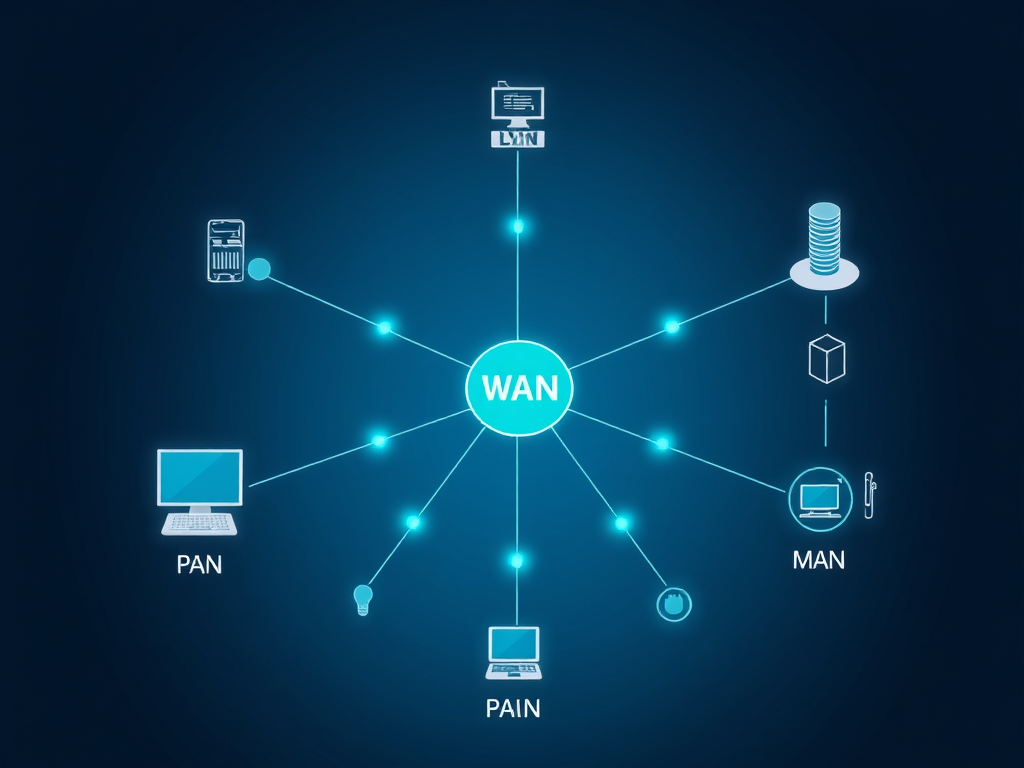
In today’s interconnected digital landscape, understanding network types is fundamental for anyone dealing with data sharing, remote collaboration, or internet-based services. From small-scale home setups to global corporate infrastructures, networks form the backbone of communication and business operations. Choosing the right network type can significantly shape the efficiency, security, and scalability of a company—or even a household.
Exploring Common Network Types and Their Core Benefits

Different network types—such as LAN (Local Area Network), WAN (Wide Area Network), and PAN (Personal Area Network)—serve distinct purposes. A LAN, for example, enables high-speed connectivity within a limited area such as an office or school. Its benefits include low latency, high data transfer rates, and easy resource sharing among connected devices. Many educational institutions use LAN-based intranets to distribute study materials and manage administrative systems seamlessly. A good example is a university campus that relies on a LAN setup for accessing centralized databases across multiple departments.
A WAN, by contrast, expands connectivity across cities, countries, or even continents. This type of network, commonly used by multinational corporations, connects multiple LANs to ensure smooth communication between distant offices. Companies like Cisco Systems and AT&T Business rely on WAN technologies to connect global operations. The integration of cloud computing through WANs also enables remote teams to collaborate effectively using tools like Google Workspace or Microsoft 365.
PANs and MANs (Metropolitan Area Networks) address specific, smaller-scale needs. PANs, like Bluetooth or Wi-Fi Direct connections, focus on personal device networking—think of smartwatches synchronizing with smartphones. Meanwhile, MANs bridge the gap between LANs and WANs, connecting regional offices or city-based organizations. A well-documented case study is the city-wide fiber optic MAN deployed in Seoul, South Korea, which has resulted in one of the fastest average internet speeds in the world, fostering public Wi-Fi and smart city innovations.
Key Takeaways:
- LAN: Ideal for local, high-speed, internal data sharing.
- WAN: Best for connecting remote branches and enabling global communication.
- PAN & MAN: Designed for personal or regional networking with flexible scalability.
Challenges and Limitations of Various Network Structures

Despite their advantages, each network type brings unique challenges that may impact performance and maintenance efficiency. For instance, LANs can suffer from scalability issues—expanding beyond a single building or site requires additional investment in switches, routers, and cabling infrastructure. Additionally, as the network grows, managing user permissions and preventing bottlenecks become more complex. Small businesses often need to consider upgrading to hybrid models that incorporate elements of WANs or virtual networks for broader connectivity.
WANs, while crucial for global operations, come with high setup and maintenance costs. Security becomes a major concern, as transmitting information across long distances exposes data to interception risks. For example, according to a 2023 Statista report, over 30% of organizations experienced some form of data breach tied to their WAN configurations. Businesses often mitigate this by adopting VPNs (Virtual Private Networks) or encrypted tunnels to safeguard communication between sites. However, these solutions can introduce latency or require significant IT expertise.
MANs and PANs face their own constraints. In urban MAN deployments, issues such as congestion, interference, or bandwidth limitations can arise, especially when multiple service providers share infrastructure. Similarly, PANs are highly dependent on proximity and are prone to connection instability or battery drain in wireless devices. A notable real-world example is the temporary connectivity failures experienced during public events like the Olympics, where thousands of devices compete within limited network ranges.
Key Takeaways:
- LANs: Limited by physical boundaries and scalability.
- WANs: High cost, complex security, and latency challenges.
- PANs & MANs: Proximity and interference issues in dense network environments.
Choosing the right network type demands a careful balance between range, speed, cost, and security. Each structure—whether a simple PAN or a vast WAN—plays a vital role depending on the user’s needs and scale of operation. As digital transformation accelerates, hybrid networks combining elements of each type are becoming the new standard for flexibility and resilience.
Reflect on your personal or organizational demands: Do you need fast local file sharing, or do you prioritize secure global access? Understanding these factors will guide smarter decisions for future networking strategies and ensure your connectivity evolves alongside technological innovation.
Discover more from Archer IT Solutons
Subscribe to get the latest posts sent to your email.


No responses yet