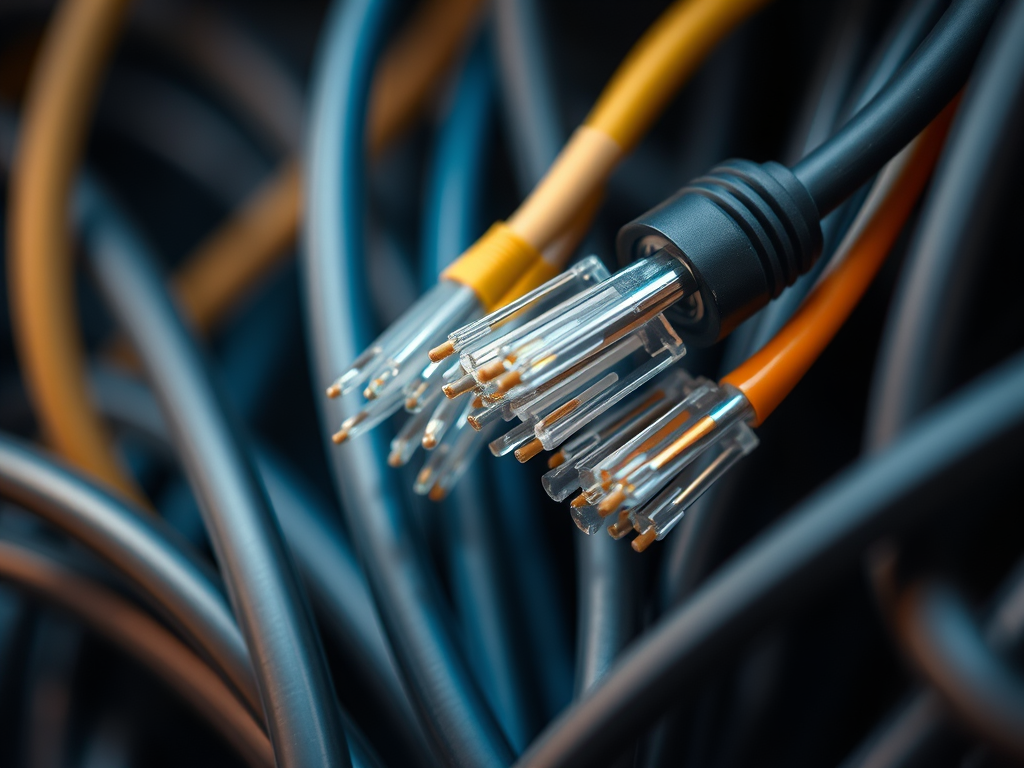
Networking is the invisible backbone of our digital world. Whether at home or in enterprise environments, data travels through cables that form the physical layer of a network. Different types of network cables are designed to serve diverse needs, ensuring speed, reliability, and scalability. By understanding their strengths and weaknesses, businesses and individuals can make more informed decisions when building or upgrading their networks.

Exploring Key Types of Network Cables in Modern Use
When we discuss network connectivity, three primary types of cables typically emerge: twisted pair, coaxial, and fiber optic. Each of these plays a vital role in supporting modern digital communication. Twisted pair cables, for instance, are the most widely used in local area networks (LANs). They consist of pairs of copper wires twisted together to minimize electromagnetic interference, and they range in categories such as Cat5e, Cat6, and Cat7. Cat6 cables, for example, can handle speeds up to 10 Gbps over short distances, making them ideal for office environments.
Coaxial cables, recognizable by their central conductor surrounded by a metallic shield, have long been used for television and broadband internet. Their design allows for strong resistance against signal interference, making them well-suited for long-distance transmission. Though less common in modern LAN setups, they remain an integral component in telecommunications and cable internet systems. Universities and hospitals often rely on these cables for secure, stable connections in legacy systems.
Finally, fiber optic cables represent the pinnacle of data transmission technology. They use strands of glass or plastic fibers to transmit data as light pulses, offering speeds that can surpass 100 Gbps. Because of their immunity to electrical interference, fiber is favored for backbone connections between buildings and cities. In 2023, a study by the International Telecommunication Union (ITU) projected a 25% annual global increase in fiber adoption due to its superior bandwidth and long-term reliability.
Key takeaways:
- Twisted pair cables are affordable and reliable for short-range connections.
- Coaxial cables provide strong shielding for medium-range applications.
- Fiber optics offer unmatched speed and distance for high-demand environments.
Real‑World Examples and Case Studies of Cable Efficiency
A telling example of fiber optic efficiency can be seen in Google’s data center operations. According to internal case studies shared through Google’s open infrastructure reports, the company reduced latency by nearly 40% after upgrading from copper to fiber connections between major data centers. The shift not only enhanced bandwidth but also reduced energy consumption per transmitted byte — a clear win for both performance and sustainability.
In another real-world scenario, a mid-sized financial firm in London revamped its office network by replacing its aging Cat5e infrastructure with Cat6a cabling. This upgrade enabled the firm to achieve gigabit-level performance and handle high-volume transactions without lag. A post-installation audit, published on networkcomputing.com, revealed that the improved data flow reduced server downtime by 18%, underscoring the tangible business value of cable modernization.
Lastly, rural broadband initiatives in countries such as Kenya and India have demonstrated how hybrid cable networks can deliver results. By combining fiber backbones with coaxial local links, providers like Liquid Intelligent Technologies have extended connectivity to remote communities. This hybrid approach demonstrates that no single cable type fits all — the best results come from aligning technology choices with environmental and economic realities.
Key takeaways:
- Fiber upgrades have a measurable impact on network efficiency and scalability.
- Cat6a cabling supports gigabit performance ideal for medium businesses.
- Hybrid models bridge infrastructure gaps in rural and challenging terrains.
Different types of network cables each bring unique strengths to the table. Selecting the right one depends on factors such as distance, bandwidth needs, and environmental conditions. As connectivity demands grow, understanding the balance between cost, performance, and scalability becomes crucial. Readers are encouraged to assess their own networking environments — whether at home, in the office, or across enterprise systems — and consider which cable type best supports their future data needs. By making informed choices today, we build the resilient networks of tomorrow.
Discover more from Archer IT Solutons
Subscribe to get the latest posts sent to your email.


No responses yet