Understanding How TCP IP Relates to the OSI Model
In today’s connected world, understanding how TCP/IP relates to the OSI model helps IT professionals, web developers, and business owners ensure efficient communication and reliable IT performance. Both models serve as frameworks for data communication, but while OSI offers a conceptual guide, TCP/IP delivers practical implementation. By learning these relationships, you can enhance your network setup, troubleshooting, and performance management—whether you are hosting a website, managing remote IT systems, or working on a cloud infrastructure.
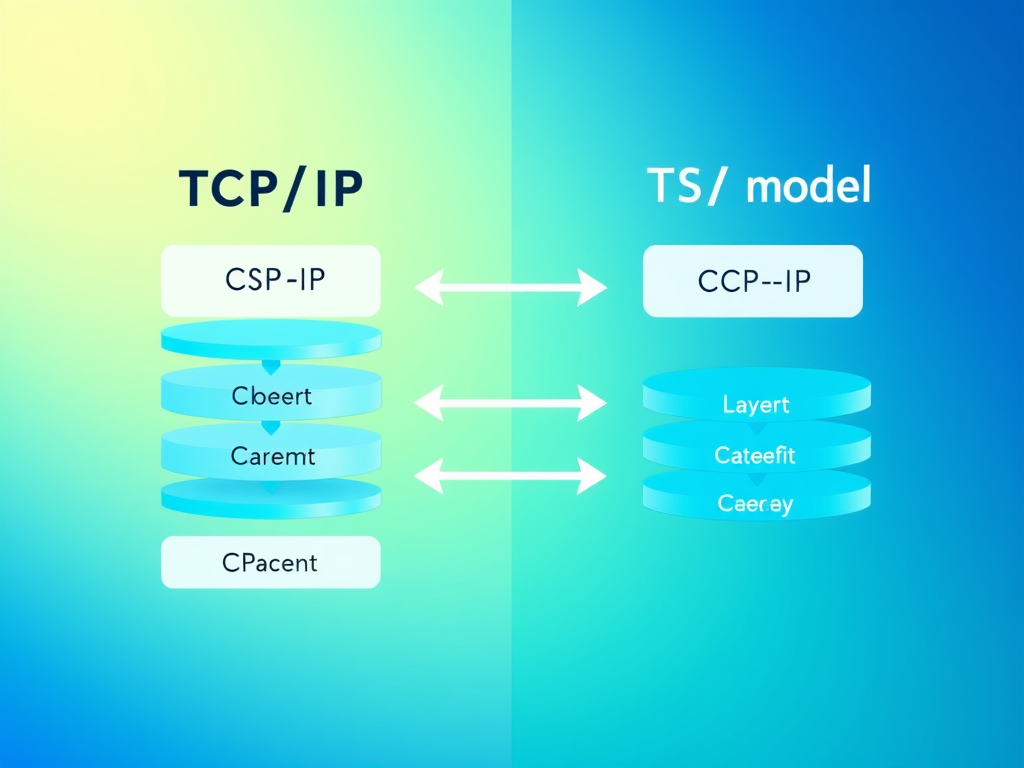
Mapping TCP/IP Layers to the OSI Model Framework
The OSI model consists of seven layers, guiding how data should move across a network. In contrast, TCP/IP simplifies these layers into four: Application, Transport, Internet, and Network Access. The Application layer in TCP/IP corresponds to the top three layers of the OSI model—Application, Presentation, and Session—where user interactions and data formatting take place. This merging simplifies real-world communication without losing core functionality.
The Transport layer in TCP/IP aligns closely with the Transport layer in OSI, using protocols like TCP (Transmission Control Protocol) and UDP (User Datagram Protocol). TCP ensures reliability by establishing a connection and verifying data delivery, essential for tasks like file transfers or website loading. UDP, on the other hand, favors speed over reliability, useful in streaming or online gaming environments.
The Internet and Network Access layers of TCP/IP relate to the OSI’s Network, Data Link, and Physical layers. These layers handle addressing (like IP addresses), routing, and the hardware-level delivery of packets. In simple terms, the OSI model provides the “blueprint,” while the TCP/IP model builds the “working structure.” Archer IT Solutions helps bridge this understanding through Managed IT Services and Local IT support for optimizing data flow across systems—Learn more here.
Key Differences and Similarities Between TCP/IP and OSI
While both models aim to standardize communication, their approaches differ. The OSI model is a theoretical reference teaching structure and function separation. TCP/IP, however, is practical, designed around the protocols that make internet communication possible. OSI focuses more on universal standardization; TCP/IP focuses on connecting real-world systems effectively.
One major similarity is their hierarchical design—information travels downward through layers, each adding unique data before transmission. For example, in a typical WordPress hosting setup, user-entered data travels through multiple layers (Application through Network Access), ensuring accurate, secure delivery between client and server. Both models also rely on encapsulation—a process of packaging data with necessary addressing and control information.
Pros: TCP/IP is simpler, faster, and widely implemented. It’s fault-tolerant and scalable for large networks.
Cons: OSI, while detailed, is rarely used directly; TCP/IP lacks strict separation between layers, causing overlap.
If data fails to transmit properly, troubleshooting steps include checking IP configurations, ensuring proper DNS resolution, and verifying firewall or port configurations. Archer IT Solutions’ onsite or remote computer support services can diagnose such issues quickly—simply open a support ticket at www.archer-its.com/ticket/.
Troubleshooting and Real-World Example
Consider a company’s web hosting server where clients experience intermittent disconnections. Using the OSI model as a diagnostic guide, engineers can check the Physical layer (cables, switches), the Network layer (routing, IP), and Transport layer (TCP connection stability). Mapping this to TCP/IP offers real-time verification points like IP pings or port checks.
A real-life example from Archer IT Solutions involves a client whose WordPress hosting performance degraded due to dropped TCP packets. By analyzing both the Transport and Internet layers, our Local IT support identified a faulty router configuration and resolved it promptly, resulting in a dramatic boost in site responsiveness.
For businesses seeking seamless network performance, Archer IT Solutions provides comprehensive services—from Managed IT services ensuring continuous monitoring, to web hosting solutions optimized with a 15-day refund policy. Interested in personalized help? Get a Free IT Consultation or email us at info@archer-its.com.
Understanding how TCP/IP relates to the OSI model empowers you to design, manage, and troubleshoot networks more effectively. While OSI gives structure, TCP/IP brings function. Together, they define the foundation of modern networking—powering everything from online communication to cloud and WordPress hosting. Whether you’re a small business owner or a tech professional, Archer IT Solutions ensures your systems perform at their best with expert Local IT support and reliable Managed IT services.
Need expert advice?
- Get a Free IT Consultation for Local or Remote IT Support
- Try our Web Hosting with a 15-day refund policy
- Contact us: support@archer-its.com
Further Reading:


No responses yet