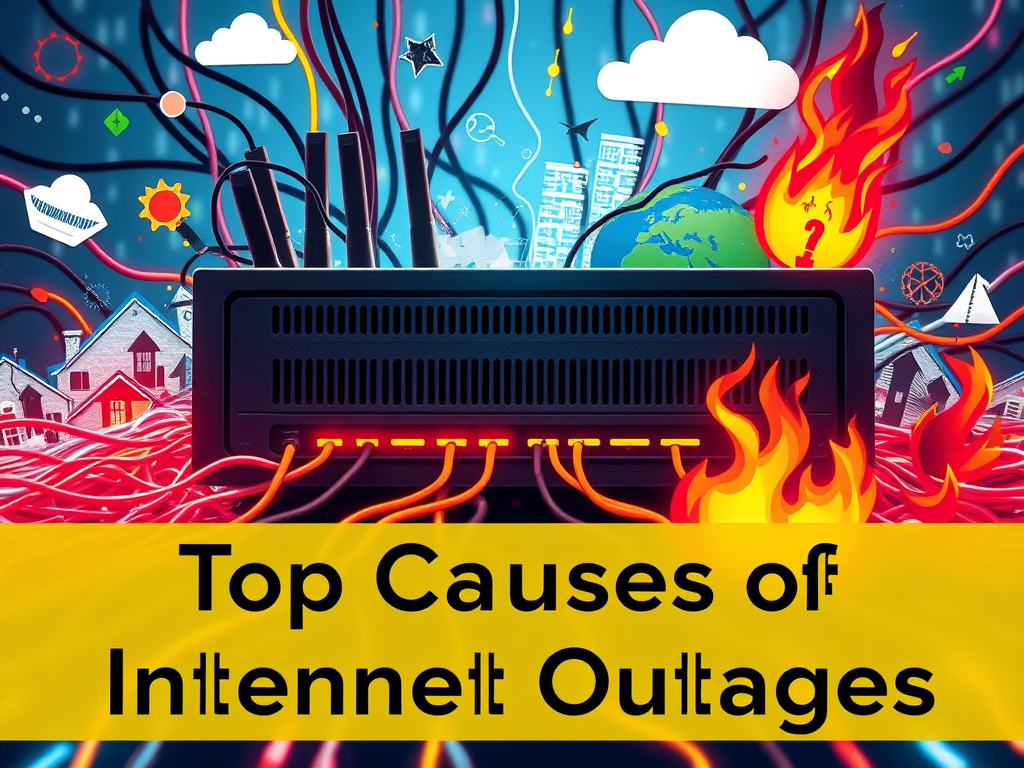
Internet outages can be more than just a temporary inconvenience—they can interrupt business operations, disrupt communication, and cause significant data loss. Understanding what causes these outages is the first step in minimizing their impact and finding ways to stay connected during unexpected disruptions. Whether you’re working remotely, managing a company network, or simply browsing at home, knowing how and why outages occur can help you prepare effectively.
Understanding the Main Causes of Internet Outages
Internet outages can occur for a wide variety of reasons, ranging from technical glitches to natural causes. One of the most common reasons involves hardware malfunctions, such as faulty routers, damaged cables, or server failures. For individuals, this might mean a modem reboot is needed, but on a larger scale, a single equipment failure in a data center can take an entire region offline. According to Akamai, hardware-related disruptions account for roughly 25% of global outages.
Another frequent cause stems from network congestion. When too many users attempt to access the network simultaneously—especially during high-demand events like streaming major sports finals or remote work peaks—network capacity can become overwhelmed. Internet Service Providers (ISPs) sometimes throttle speeds to manage bandwidth usage, which can lead to seemingly random slowdowns or temporary interruptions.
External factors such as natural disasters and environmental conditions also play significant roles. Hurricanes, floods, and even simple construction digs can sever fiber-optic lines or damage base stations. For instance, during the 2020 wildfires in California, widespread internet outages occurred as power lines and data routes were destroyed to prevent further fire hazards. These events demonstrate how our digital infrastructure is still deeply connected to the physical world.
Key Takeaways:
- Hardware issues remain a leading cause of outages.
- Network congestion often results from high simultaneous usage.
- External events like weather or construction influence connectivity reliability.
Real-Life Examples and Statistics Behind Network Failures
One striking example of a large-scale internet outage took place in December 2021, when Amazon Web Services (AWS) experienced a multi-hour downtime that affected thousands of online platforms, including Netflix, Disney+, and major e-commerce websites. The root cause was traced back to network device overloads within one region, proving how a single failure point in a distributed system can cascade globally.
Another significant event occurred when cut undersea cables in Egypt and Yemen disrupted service across parts of Africa, the Middle East, and South Asia. According to Cloudflare Radar, these disruptions can reduce regional connectivity by over 70%, underscoring the fragility of global internet infrastructure. This incident highlighted how physical damage—whether accidental or deliberate—can have far-reaching implications.
Statistics reveal that human error contributes to nearly 30% of outages around the world. Simple misconfigurations or software updates gone wrong can take entire networks down. In one case, a BGP (Border Gateway Protocol) misconfiguration caused Facebook’s global outage in 2021, leaving billions of users disconnected for over six hours. The event reminded companies that regular testing, redundancy, and proper failover systems are critical to maintaining uninterrupted connectivity.
Key Takeaways:
- Cloud infrastructure failures can have widespread ripple effects.
- Physical and undersea cable damage remains a key vulnerability.
- Human error is a surprisingly consistent cause of major outages.

Image: A modern server room demonstrating the complexity of network infrastructure.
Internet outages are an unavoidable part of our increasingly digital lives, but understanding their causes helps individuals and organizations build resilience. By recognizing that hardware malfunctions, human missteps, and natural disasters can all play a role, we can take proactive measures—like investing in redundancy, diversifying providers, and staying informed about network health.
Take a moment to consider how an outage might affect your daily routine or workplace. Do you have a backup plan in place, such as a mobile hotspot or a secondary connection? Reflecting on these questions now can save frustration—and productivity—when the next inevitable outage strikes.
Discover more from Archer IT Solutons
Subscribe to get the latest posts sent to your email.


No responses yet