WiFi technology is integral to modern life, evolving over decades to provide faster, more reliable connections for homes, offices, and cities. The wavelength of WiFi signals, especially those at lower frequencies, is crucial in determining how these signals propagate through walls, furniture, and open spaces. Understanding low-frequency wavelengths helps explain why some WiFi bands offer better range and penetration.
This article explores the characteristics of low-frequency WiFi signals and examines real-world scenarios demonstrating their advantages. We also present case studies from various sectors, highlighting the technology’s impact on connectivity and network efficiency.
Understanding Low-Frequency WiFi Wavelengths
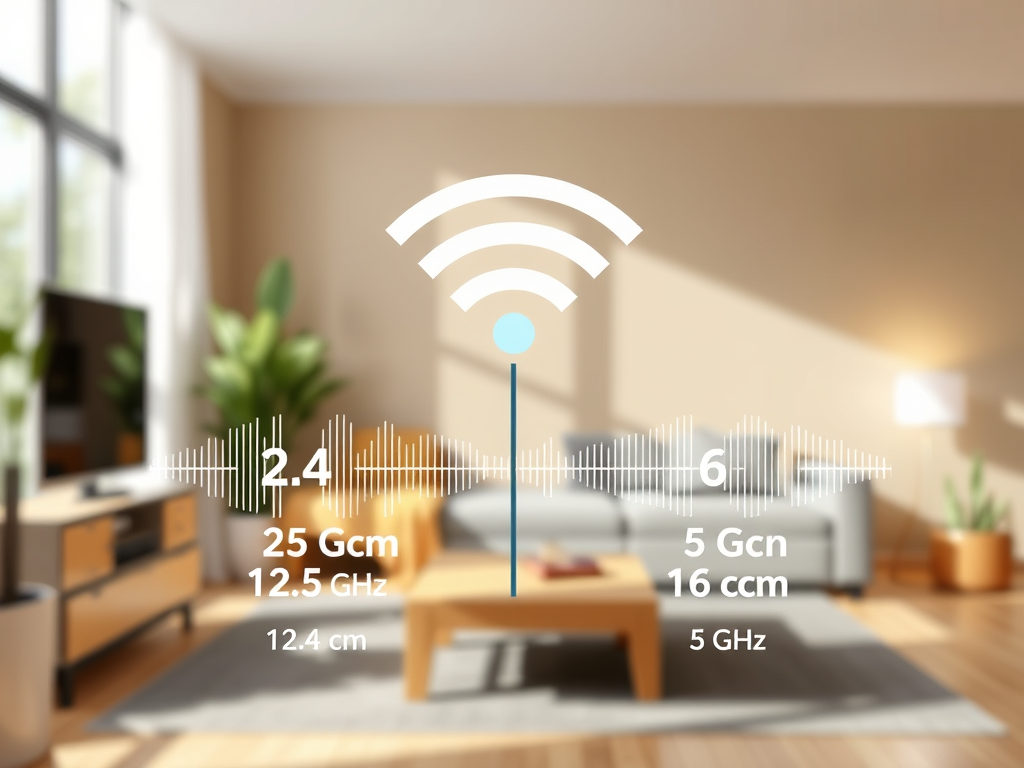
WiFi operates on multiple frequency bands, primarily 2.4 GHz and 5 GHz. The wavelength of a 2.4 GHz signal is approximately 12.5 centimeters, calculated using the formula λ = c / f, where c is the speed of light (~3×10⁸ m/s) and f is the frequency. In contrast, the 5 GHz band has a shorter wavelength of about 6 centimeters. Longer wavelengths (lower frequencies) can diffract and bend around obstacles, allowing them to travel farther in complex environments like homes and urban areas.
The 2.4 GHz WiFi band, a low-frequency transmission type, maintains stability over distance, facing less signal attenuation and penetrating materials like drywall and wood more effectively than higher frequencies. However, it is more prone to interference from other devices using the 2.4 GHz spectrum.
The behavior of lower-frequency WiFi wavelengths offers a balance between range and stability, crucial for many environments. Understanding this can help users optimize router placement and frequency selection based on their surroundings and network needs.
Key Takeaways:
- 2.4 GHz WiFi, with a wavelength of roughly 12.5 cm, offers better range and penetration.
- Lower frequencies are less affected by small physical obstructions.
- There is a trade-off with more signal congestion and reduced maximum speeds.

Real-World Benefits of Low-Frequency WiFi
Low-frequency WiFi benefits are evident in campus-wide wireless networks. Universities using 2.4 GHz frequencies achieve broader coverage across outdoor spaces and older buildings with thick walls. A study from IEEE Communications Surveys (2022) showed that networks using dual-band systems, favoring 2.4 GHz for resilience, achieved 30% greater coverage than those relying mainly on 5 GHz.
In rural broadband initiatives, organizations like BroadbandNow Research report that low-frequency WiFi systems (2.4 GHz and sub-GHz models) enable connectivity across large farmlands and remote areas without excessive infrastructure. This flexibility is vital for connecting agricultural sensors, remote IoT devices, and weather monitoring systems, as the longer wavelength ensures better propagation even with obstructed line-of-sight.
At the consumer level, smart home integration benefits from longer wavelengths. Devices like smart locks, thermostats, and sensors perform better on 2.4 GHz networks. Services such as Google Home, Amazon Alexa, and TP-Link Kasa recommend this band for maximum reliability in larger spaces.
Key Takeaways:
- Educational and rural systems use low-frequency WiFi for larger coverage.
- IoT and smart home devices benefit from the enhanced reach and penetration of 2.4 GHz.
- Hybrid use of 2.4 GHz and 5 GHz optimizes performance across varied conditions.

Understanding low-frequency WiFi wavelengths opens new ways to optimize network performance and deployment strategies. Whether configuring a home router, managing an enterprise network, or designing a smart farming system, recognizing how longer wavelengths interact with the environment is invaluable.
As we advance to WiFi 7 and beyond, balancing high throughput with robust signal reach remains central to wireless design. The key is leveraging both low-frequency resilience and high-frequency speed.
Consider your connectivity needs—do you prioritize extended range or peak speed? By understanding how wavelength affects WiFi performance, you can make smarter, more effective choices for a connected future.
Discover more from Archer IT Solutons
Subscribe to get the latest posts sent to your email.


No responses yet