The Importance of Network Interface Cards in Connectivity
Every time you send an email, stream a movie, or connect to Wi‑Fi, a critical piece of hardware ensures your device can communicate with the digital world—the Network Interface Card (NIC). Whether integrated into a motherboard or added as an external adapter, the NIC is the bridge between your computer and the network. Understanding how it functions and why its performance matters can help both IT professionals and everyday users make smarter connectivity choices.

Understanding the Role and Function of a NIC in Modern Networks
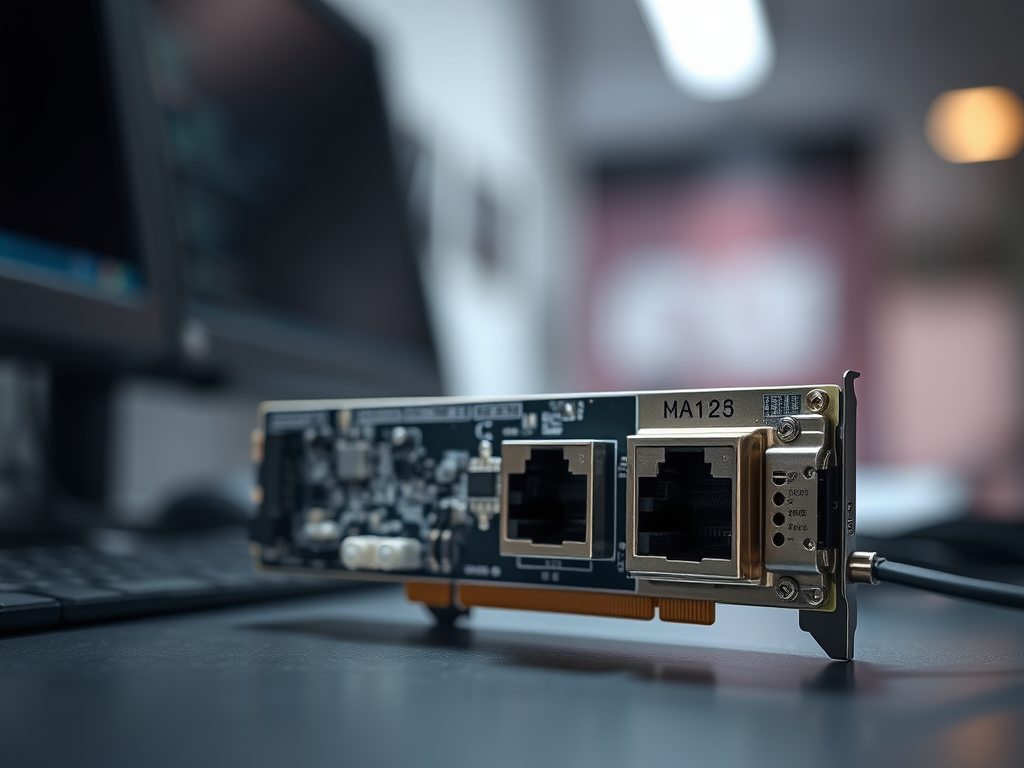
A Network Interface Card (NIC) is a dedicated hardware component that connects a computer or server to a network, enabling it to send and receive data. Traditionally, NICs were separate expansion cards inserted into a computer’s motherboard, but many modern devices now feature integrated NICs. Each NIC has a unique Media Access Control (MAC) address, which allows network devices to identify and communicate with one another efficiently. The NIC translates data into electrical or optical signals suitable for transmission over Ethernet cable, fiber, or wireless medium.
From a performance standpoint, the NIC’s quality and specifications directly influence network speed and reliability. For example, Gigabit Ethernet NICs support up to 1 Gbps, while 10 Gigabit NICs and 25 Gigabit NICs are common in enterprise servers and data centers. These cards help systems handle massive amounts of data transfer, essential for cloud applications, virtualization, or large-scale streaming. This explains why high‑performance computing clusters and business networks often rely on professional‑grade adapters from trusted manufacturers.
A well‑configured NIC can also enhance network efficiency through offloading techniques such as TCP checksum offload or Large Send Offload (LSO), which reduce processing tasks on the CPU. Modern operating systems like Windows Server or Linux distributions provide built‑in tools to configure and fine‑tune NIC behavior to match workloads.
Key Takeaways:
- A NIC establishes the physical and logical link between a device and a network.
- Speeds can range from 100 Mbps to well over 100 Gbps in advanced setups.
- Performance optimization features reduce CPU load and improve throughput.
Real‑World Cases Showing the Impact of NIC Performance
One clear example of NIC performance benefits comes from data center operations. According to Intel’s network solutions data, upgrading from 1 Gbps to 25 Gbps NICs can reduce latency by up to 50% in virtualized environments, leading to faster application response times. A large e‑commerce platform reported that after upgrading its network infrastructure with high-speed NICs, checkout latency dropped significantly, improving user experience and overall sales conversions.
In another case, a university research lab running thousands of simulations across distributed servers adopted RDMA-enabled NICs (Remote Direct Memory Access). This technology allowed servers to communicate data directly between memory spaces, bypassing the CPU and achieving near real‑time analysis. As a result, their data processing throughput increased by more than 40%, reducing computation time for scientific modeling projects. Details of similar projects can be found through NVIDIA Networking case studies.
Small to medium businesses also benefit from optimized NIC setups. By implementing managed NICs with VLAN tagging, a logistics company improved security and traffic management across departmental networks. According to internal metrics, network congestion incidents dropped by 35%, providing smoother file synchronization and VoIP connectivity. These examples illustrate that the NIC’s role goes beyond basic connectivity—it directly impacts productivity, reliability, and performance.
Key Takeaways:
- Upgrading NIC speed and support features can drastically improve response times.
- RDMA and offloading technologies enable faster processing in compute-heavy tasks.
- Proper NIC configuration enhances both performance and network security.
The Network Interface Card is more than a simple connector—it’s the gatekeeper of your digital communication. As devices become smarter and data demands escalate, the value of choosing the right NIC continues to grow. Whether you’re a gamer seeking low-latency performance, an administrator maintaining cloud servers, or a researcher running distributed computations, your NIC selection plays a vital role in your digital efficiency.
Think about your current network environment: are you getting the performance you expect, or could a higher-grade NIC make a difference? Explore available networking resources, learn from documented case studies, and experiment with configuration options suited to your workflow. A small hardware insight today could lead to significant connectivity improvements tomorrow.
Discover more from Archer IT Solutons
Subscribe to get the latest posts sent to your email.


No responses yet