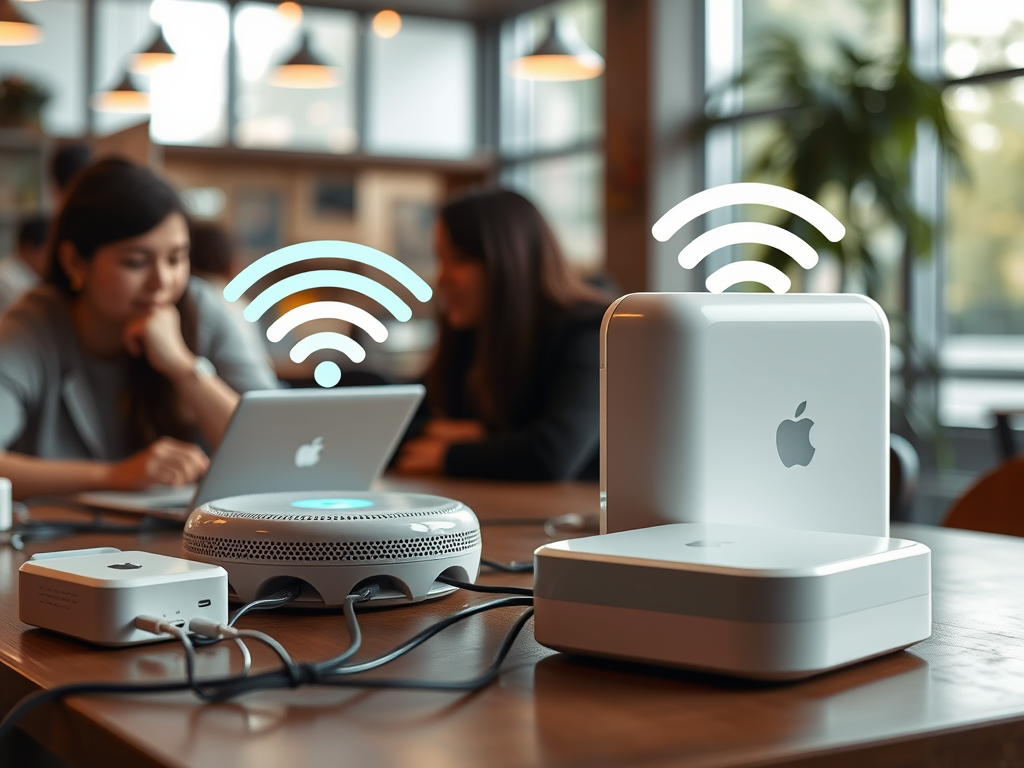
Wi-Fi has become an invisible thread connecting our digital lives. Whether we’re streaming a movie, attending a remote meeting, or managing smart devices, Wi-Fi is often taken for granted. But behind this seamless technology lies a fascinating story of innovation and collaboration spanning decades. Understanding how and when Wi-Fi was invented helps us appreciate not just its technical brilliance, but also its profound impact on society.
The Origins of Wi-Fi: From Early Experiments to Global Adoption
Wi-Fi, short for “Wireless Fidelity,” traces its roots back to research in the mid-20th century. The journey began in 1971 with ALOHAnet, a pioneering computer networking system developed at the University of Hawaii. This project demonstrated how computers could communicate wirelessly using radio waves. Fast forward to the late 1980s, when a group of engineers led by John O’Sullivan and his team at the Commonwealth Scientific and Industrial Research Organisation (CSIRO) in Australia made breakthroughs that helped establish the core technology behind modern Wi-Fi.
In 1997, the Institute of Electrical and Electronics Engineers (IEEE) officially introduced the 802.11 standard, marking the formal birth of Wi-Fi as a universal wireless communication protocol. This milestone standardized the way devices could connect wirelessly, enabling compatibility across manufacturers. By 1999, the Wi-Fi Alliance was formed to ensure interoperability, certification, and global adoption of the technology. This collaboration accelerated the spread of Wi-Fi from professional environments to households and public spaces.
By the early 2000s, Wi-Fi had become an everyday technology, with hotspots appearing in airports, cafes, and universities. Key takeaways:
- 1971: ALOHAnet demonstrated early wireless networking.
- 1997: IEEE released the 802.11 standard.
- 1999: Wi-Fi Alliance was founded, promoting widespread adoption.

How Wi-Fi Revolutionized Connectivity Through Real-World Examples
Wi-Fi transformed daily life by enabling access to the internet without cables. This shift revolutionized not only personal convenience but also industries dependent on digital connection. For example, Stanford University implemented campus-wide Wi-Fi in the early 2000s, allowing students to collaborate freely without being bound to wired networks. This flexibility helped foster innovation environments where wireless collaboration became the norm.
In the business sector, companies like Starbucks embraced Wi-Fi early on to enhance customer experience and create “third spaces” between home and work. Offering free internet access turned cafes into collaborative hubs for freelancers, students, and entrepreneurs—a cultural shift supported by major platforms such as Google Workspace and Slack. Meanwhile, rural areas benefited from initiatives such as Airband by Microsoft, which used Wi-Fi and broadband infrastructures to close digital divides globally.
Statistics show that by 2023, over 22 billion Wi-Fi devices were in use worldwide, according to the Wi-Fi Alliance. Key takeaways:
- Wi-Fi enables flexible learning, work, and collaboration.
- Public Wi-Fi transformed social spaces into innovation centers.
- Global initiatives use Wi-Fi to reduce connectivity inequality.
Wi-Fi’s invention and evolution show how innovation can reshape human connection. From the experimental stages at universities to a tool empowering billions, Wi-Fi is more than a technology—it’s a foundation of modern life. As we move into a world of smart homes, telemedicine, and AI-driven workplaces, reflecting on Wi-Fi’s history helps us see the power of collaboration and shared access.
Think about your own relationship with Wi-Fi. Is it helping you connect, learn, or create in new ways? The next time you tap into a wireless network, take a moment to appreciate the decades of science and teamwork that made your connection possible.
Discover more from Archer IT Solutons
Subscribe to get the latest posts sent to your email.


No responses yet