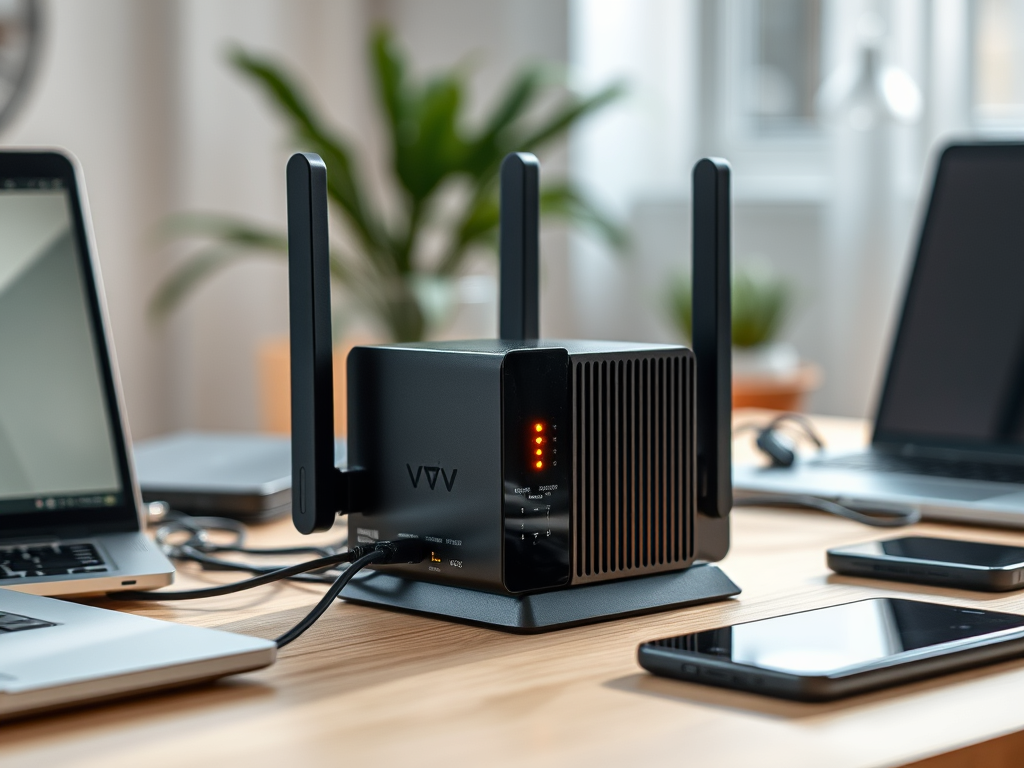

In today’s connected world, the modem plays a critical yet often overlooked role in providing seamless internet access. Many people recognize it as the blinking box that enables Wi-Fi, but few understand what it actually does or how essential it is to maintaining efficient communication between our devices and the wider internet. This article explores what a modem is, how it functions, and how real-world examples demonstrate its indispensable value in both home and business connectivity.
Understanding How a Modem Powers Your Internet Connection
A modem—short for modulator-demodulator—acts as the translator between your local network and your Internet Service Provider (ISP). Its primary function is to convert digital signals from your computer or router into analog signals that can travel over phone lines, cable systems, or fiber optics, and vice versa. Without this conversion process, communication between your home network and the internet would be impossible. Essentially, the modem is what bridges the digital world inside your home and the data highways outside.
Modern modems come in various forms depending on the connection type—DSL, cable, or fiber. For example, a cable modem communicates through the same coaxial cable used for television service, while a fiber modem, or Optical Network Terminal (ONT), connects via light pulses in fiber-optic lines. Each type serves the same purpose—enabling data transmission—but at vastly different speeds and capacities. The choice of modem also influences overall performance, latency, and reliability of the connection.
To put things in perspective, according to a 2023 Statista report, over 91% of U.S. households use broadband connections, and nearly all of them rely on some form of a modem. Whether you are streaming a 4K movie, working remotely, or gaming online, that smooth experience depends heavily on the modem’s ability to deliver data efficiently.
Key Takeaways:
- A modem translates digital and analog signals between your network and your ISP.
- The type of modem used affects speed, signal strength, and reliability.
- Modems are essential for enabling any kind of broadband internet connection.
Real-Life Examples and Case Studies of Modem Efficiency
In urban households, modems serve as the foundation of stable internet performance. For instance, a family in Chicago upgraded their DOCSIS 3.0 cable modem to a DOCSIS 3.1 model, resulting in a 35% improvement in bandwidth utilization and fewer connection drops during heavy streaming hours. This small change illustrates how modem technology directly impacts everyday internet quality and consistency.
Businesses, too, depend on modem efficiency for operations. A 2022 small business case study published by Network Computing showed that upgrading legacy modems to fiber-optic ONTs in a mid-sized retail chain reduced downtime by 48% across all 25 store locations. The improvement translated into faster transaction processing and more reliable inventory management systems—key factors for customer satisfaction.
Educational institutions also benefit from optimized modem performance. When EdTech Magazine analyzed network efficiency in remote learning environments, schools that replaced outdated DSL modems reported that video conferencing stability increased by 60%. This directly improved participation rates in online classes, demonstrating the modem’s role beyond simple connectivity—it supports meaningful digital interaction.
Key Takeaways:
- Upgrading modem technology can significantly boost internet speed and reliability.
- Real-world improvements show measurable business and educational benefits.
- Modems are integral to supporting a wide range of modern digital functions.
Modems are the unsung heroes behind every fast, reliable internet connection. They may seem like a simple component, but their role in converting and directing data is crucial to modern communication. From homes and offices to schools and public spaces, the modem ensures that digital information flows smoothly across every part of our connected world.
As you think about your own internet setup, consider how current your modem is and whether it meets your household or business demands. A small upgrade might bring noticeable improvements to speed, stability, and performance. Take a moment to reflect—when was the last time you checked your modem’s capabilities? It might just be the key to unlocking a smoother, faster online experience.
Discover more from Archer IT Solutons
Subscribe to get the latest posts sent to your email.


No responses yet