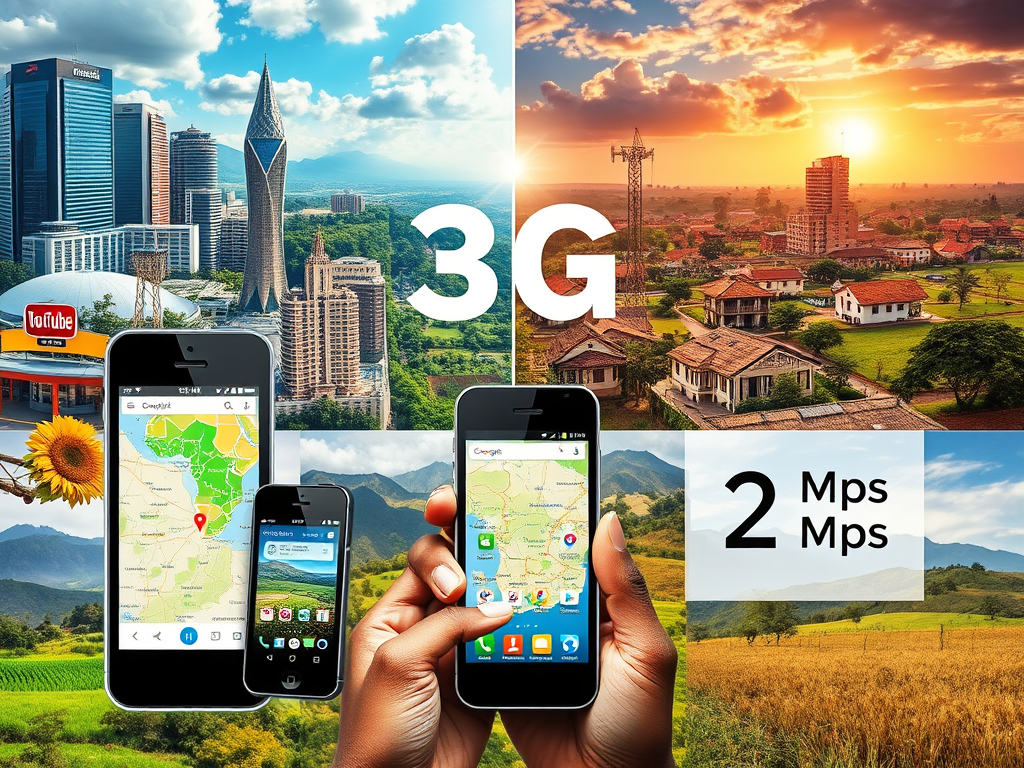
Understanding the Real-World 3G Throughput Performance
The evolution of wireless technologies has significantly shaped how people connect, communicate, and consume data. Third Generation (3G) networks marked a major leap from the early days of mobile internet, providing faster speeds and enabling mobile web browsing, email access, and richer media experiences. However, while theoretical data rates were often cited in the range of several megabits per second, real-world throughput told a slightly different story.
In practical conditions, the throughput of the wireless technology 3G is around 384 kbps to 2 Mbps, depending on the standard used — such as UMTS, HSPA, or HSPA+. Various environmental factors, including signal strength, user load, and infrastructure quality, influence these speeds. For example, in urban environments with high user density, speeds may drop below 500 kbps, whereas in rural areas with better signal conditions but fewer users, throughput can often rise closer to the upper end of the spectrum.
3G technology brought substantial improvements to mobile users, particularly between the mid-2000s and early 2010s. It supported mobile applications like Google Maps, YouTube (mobile), and email synchronization at reasonable speeds for the first time. These services became accessible on the go, revolutionizing personal and business communication. Although 3G is now largely superseded by 4G and 5G, its throughput paved the way for the connected lifestyle we now take for granted.

Case Studies Highlighting 3G Throughput in Daily Use
A series of case studies can help illustrate how 3G throughput translated into tangible user experiences. For instance, a 2012 study by OpenSignal reported that the average global 3G download speed was approximately 1.2 Mbps, with countries like Japan and the United Kingdom achieving higher averages of 2 Mbps or more. At these speeds, users could comfortably stream low-resolution videos or browse social media platforms such as Facebook and Twitter without noticeable buffering. The data also revealed large variability in throughput depending on network congestion and the mobile operator’s infrastructure quality.
In a case study conducted in Nairobi, 3G technology played a vital role in expanding access to mobile banking apps like M-PESA (SafariCom official site). Even though throughput was often limited to below 1 Mbps, the technology provided sufficient stability for secure transactions. This enabled millions of users to perform financial transfers and access essential services, demonstrating that 3G’s modest speeds were still transformative in contexts where mobile broadband was previously inaccessible.
Another example can be found in public transportation systems across Europe, where 3G networks powered early on-board Wi-Fi services. Speeds averaging between 0.7 Mbps and 1.5 Mbps allowed commuters to browse news platforms such as BBC News (bbc.com/news) or check email while traveling. Throughput limitations were evident when multiple passengers connected simultaneously, but the technology still represented a major leap in convenience compared to the earlier 2G data speeds.
Key Takeaways:
- Typical 3G throughput ranges between 384 kbps and 2 Mbps, influenced by multiple variables.
- Real-world case studies demonstrate how even modest speeds enabled digital inclusion and mobile innovation.
- 3G infrastructure continues to support essential services in regions where 4G and 5G remain scarce.

While today’s networks are moving beyond 3G, understanding how throughput shaped the mobile experience helps appreciate the technology’s foundational role. The throughput of wireless technology 3G — though modest by modern standards — provided the first taste of true mobile broadband for billions worldwide. As you reflect on your current data needs, think about how your usage patterns would have fit within a 1 Mbps world. Would your favorite apps still perform well? Recognizing these historical limitations can deepen appreciation for today’s connectivity and inspire curiosity about how future networks will continue to evolve.
Discover more from Archer IT Solutons
Subscribe to get the latest posts sent to your email.


No responses yet