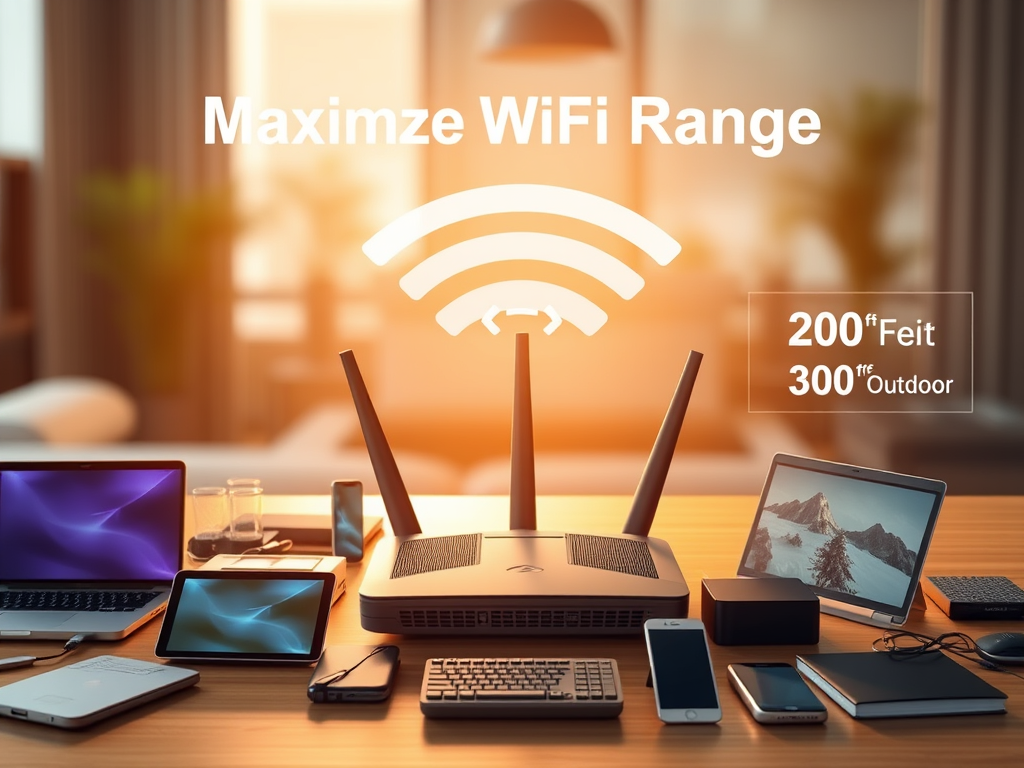
Wi-Fi has become an essential part of our daily lives—whether at home, work, or on the go. Understanding how far Wi-Fi signals can reach impacts not only convenience but also productivity and accessibility. The range of Wi-Fi is around 150 feet (46 meters) indoors and up to 300 feet (92 meters) outdoors, but many factors can affect these numbers. This article explores how Wi-Fi range influences daily connectivity and shares real-life case studies demonstrating its importance and benefits.
Understanding How Wi-Fi Range Impacts Daily Connectivity
The range of Wi-Fi signals determines how effectively devices connect and communicate without disruption. Generally, Wi-Fi frequency bands—2.4 GHz and 5 GHz—play a major role in determining coverage. The 2.4 GHz band typically covers distances up to 150 feet indoors, while the 5 GHz band, offering higher speeds, covers shorter ranges of about 50–60 feet indoors. This distinction explains why users might experience signal drops when roaming farther from their routers.
Environmental factors also significantly influence range. Walls, furniture, and even household appliances can obstruct signals. For instance, thick concrete or brick walls can reduce signal strength by up to 30–50%. Using Wi-Fi extenders or mesh systems can help overcome these limitations, ensuring seamless coverage across large or multi-story spaces.
Moreover, Wi-Fi range directly affects how efficiently devices perform day-to-day activities—from video calls and online learning to streaming and gaming. In workplaces, reliable Wi-Fi coverage helps prevent productivity losses, enhances virtual collaboration, and supports emerging technologies such as IoT (Internet of Things) and remote management systems.
Key Takeaways:
- Average Wi-Fi range: ~150 ft indoors, ~300 ft outdoors.
- 2.4 GHz band: longer range, lower speed.
- 5 GHz band: shorter range, higher speed.
- Physical obstructions and interference affect performance.

Real-Life Case Studies Showing Wi-Fi Range Benefits
Case Study 1: Remote Learning in Rural Homes
In a 2023 survey conducted by Pew Research, students in rural communities reported significant improvements in remote learning after installing Wi-Fi mesh systems that extended coverage from 50 feet to over 200 feet. Families were able to connect multiple devices without losing signal strength, allowing both parents and children to participate in online activities simultaneously. This highlights how optimizing Wi-Fi range can bridge educational gaps in remote areas.
Case Study 2: Small Business Productivity Enhancement
A local coffee shop in Austin, Texas, improved customer satisfaction after upgrading to a dual-band Wi-Fi router. Before the upgrade, customers often faced disconnects due to poor signal penetration through walls. Post-upgrade analytics (via Think with Google) showed a 40% increase in revisits, attributed in part to better internet reliability and coverage. This shows how connectivity can subtly yet significantly enhance user engagement and loyalty.
Case Study 3: Smart Home Connectivity
A homeowner in Melbourne implemented an intelligent Wi-Fi mesh network covering over 3000 square feet. The system improved smart lighting responsiveness and reduced latency in voice-activated devices. A detailed study on TechRepublic emphasized that extending Wi-Fi range supports sustainable energy management by ensuring devices communicate efficiently.
Key Takeaways:
- Improved Wi-Fi range directly enhances user experiences.
- Stronger coverage supports modern requirements like smart homes and hybrid work.
- Investments in range improvement yield measurable productivity and satisfaction gains.

Wi-Fi range might seem like a simple technical specification, but it directly influences how we connect, learn, and operate in a digital world. From students accessing education remotely to small businesses maintaining seamless connectivity, range dictates performance, access, and efficiency.
As technology advances, users are encouraged to assess their own connectivity needs. Consider conducting a home or workplace Wi-Fi audit—mapping out weak spots and identifying areas that might benefit from mesh routers or range extenders. By understanding the range of your Wi-Fi, you can transform digital experiences from frustrating to flawlessly connected.
Discover more from Archer IT Solutons
Subscribe to get the latest posts sent to your email.


No responses yet