Understanding IEEE 802.11 Authentication Modes in Practice
Wireless networking has become the backbone of modern connectivity, and the IEEE 802.11 standard defines the foundation of Wi-Fi communication. One of the crucial aspects of this standard is authentication, which determines how a device connects securely to a wireless access point. Understanding these mechanisms is essential for both network administrators and everyday users who want to ensure that their networks are safe from unauthorized access.
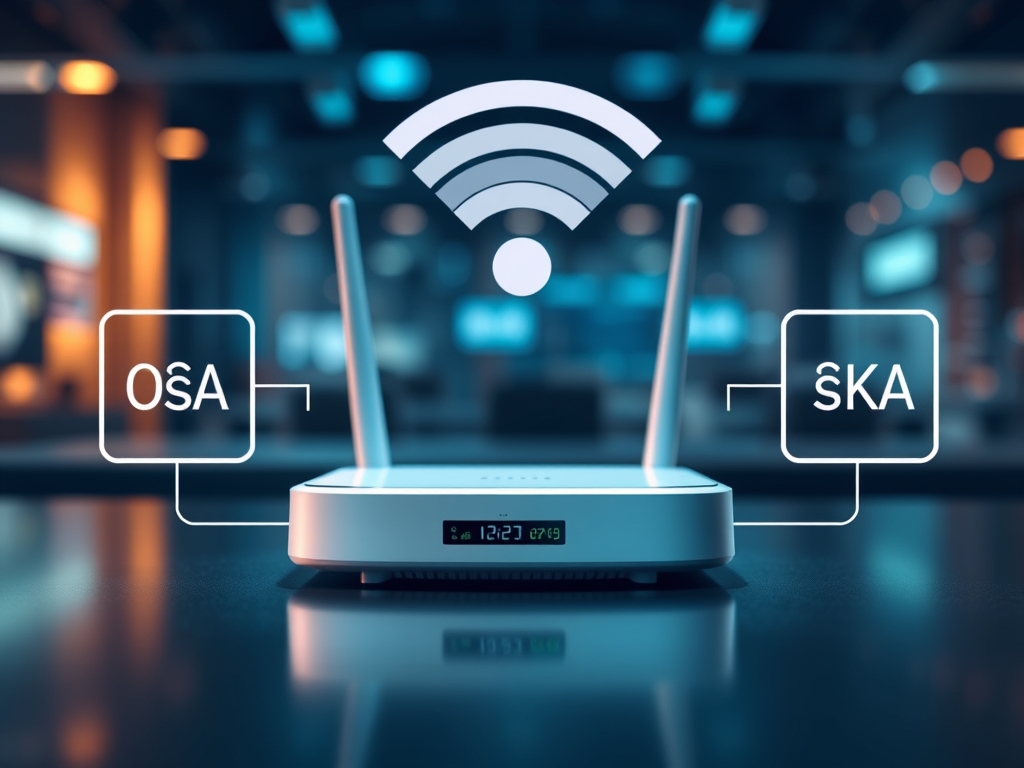
IEEE 802.11 defines two primary modes of authentication: Open System Authentication (OSA) and Shared Key Authentication (SKA). Despite their simplicity, these two modes play a critical role in how security and access control have evolved over generations of Wi-Fi standards. Open System Authentication allows any station to request access, essentially providing a minimal layer of identification before network association. Shared Key Authentication, on the other hand, uses a pre-shared WEP (Wired Equivalent Privacy) key to verify the identity of the client, adding a layer of security — though today it’s considered weak compared to modern methods.
These two basic modes laid the groundwork for more advanced security frameworks like WPA2 (Wi-Fi Protected Access 2) and WPA3, which rely on protocols such as 802.1X and EAP (Extensible Authentication Protocol) for enterprise use. Even though Open System and Shared Key are seldom used alone today, understanding their principles helps in grasping how network authentication has matured into the robust and sophisticated architecture we depend on now.
Real-World Case Studies Showcasing Authentication Benefits
In the real world, authentication modes impact not just connectivity, but also overall cybersecurity. For example, organizations like universities often rely on WPA2-Enterprise mode, which is based on the 802.1X standard. This ensures each student or staff member logs in with unique credentials, preventing unauthorized access while still letting legitimate users connect across large campus environments seamlessly. According to IEEE Spectrum (2023), over 87% of educational institutions in North America implement enterprise-level Wi-Fi authentication methods derived from 802.11.
CASE STUDY: A smart manufacturing plant in Germany upgraded from basic pre-shared key networks to 802.11i-compliant authentication. The transition reduced unauthorized access incidents by 65% within the first six months. The integration of authentication protocols like EAP-TLS improved trust between industrial devices and the control network, enabling safer operations. Example implementations and practical documentation can be found within resources such as Wi-Fi Alliance.
Key takeaways from these real-world applications include:
- Enhanced Security: Multi-layer authentication protects sensitive environments.
- Scalability: Enterprise modes accommodate large user bases efficiently.
- Compliance: Proper authentication aligns with data protection standards such as GDPR and ISO 27001.
These examples underline how understanding and properly implementing the authentication modes defined in IEEE 802.11 goes beyond theory—it delivers tangible improvements in both security and network reliability.

In conclusion, IEEE 802.11 defines two fundamental modes of authentication—Open System and Shared Key, each contributing to the historical and technical evolution of wireless network security. From these early methods, advanced frameworks like WPA2 and WPA3 have emerged, continuing to build upon the fundamental concepts introduced decades ago.
As Wi-Fi continues to shape our work, education, and personal lives, understanding how authentication modes operate empowers individuals and organizations alike to make more informed network security choices. By studying real-life use cases and statistical data, we see the value of robust authentication in protecting sensitive communications and ensuring stable access.
Take a moment to reflect on your own wireless setup—are your devices connecting securely, and are you using the appropriate authentication mode for your environment? Strengthening your network starts with understanding the foundation, and the IEEE 802.11 standard provides that very cornerstone.
Discover more from Archer IT Solutons
Subscribe to get the latest posts sent to your email.


No responses yet