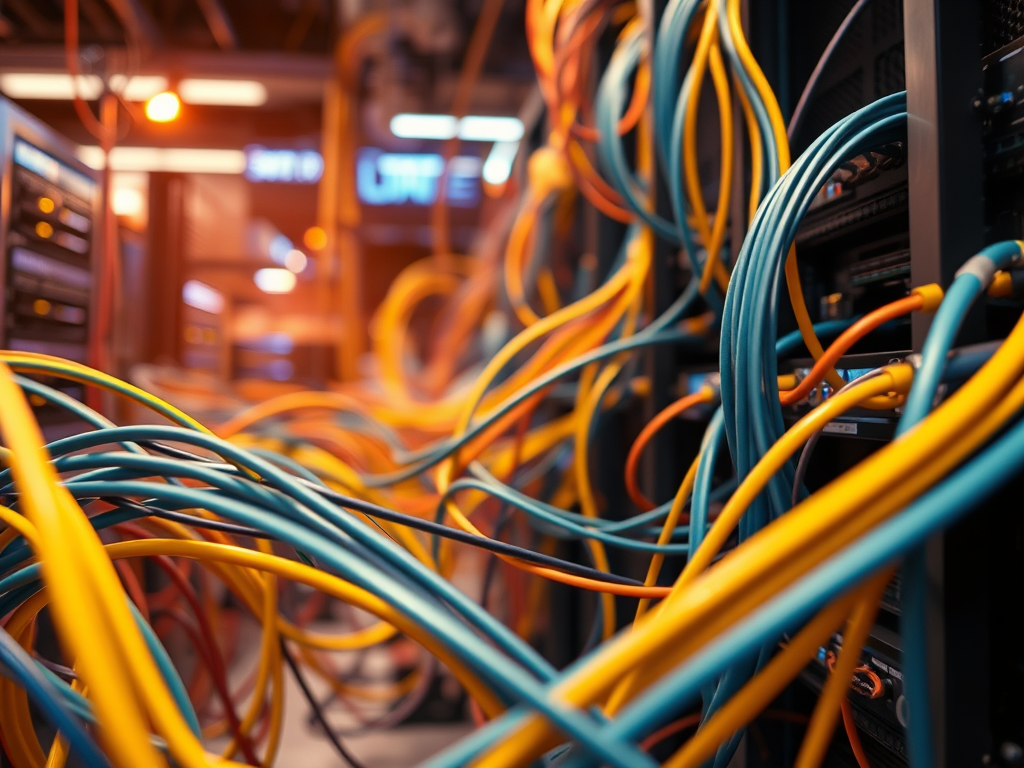

In an age where nearly every device communicates through the internet, understanding how network cables work provides insight into the invisible forces driving our connected world. From homes and offices to massive data centers, these cables are the physical foundation of modern networking. This article explores how network cables transmit data, their internal mechanisms, and how they play a vital role in real-world connectivity setups.
Understanding the Inner Workings of Network Cables
Network cables, often referred to as Ethernet or LAN cables, serve as conduits for data transmission between computers, routers, and other network-enabled devices. They work by carrying electrical signals that represent bits—the 1s and 0s of digital information. These signals travel through copper or fiber optic wires, depending on the cable type. While copper cables use electrical impulses, fiber optic cables rely on light pulses to achieve extremely high-speed data transfer.
Inside a typical Ethernet cable are twisted pairs of copper wires. The twisting helps minimize electromagnetic interference (EMI) from nearby cables and devices, ensuring signal integrity. Each pair carries data both to and from devices, with Category (Cat) levels like Cat5e, Cat6, and Cat8 representing improvements in speed, shielding, and bandwidth capacity. For example, Cat6 cables can handle data rates up to 10 Gbps over short distances.
The effectiveness of these cables relies heavily on proper installation and maintenance. Network administrators regularly test cable quality, signal loss, and interference to ensure seamless performance. According to a 2022 study by Telecom Analysis Group, approximately 60% of connection slowdowns in office environments were due to improper cable terminations or degraded cables, highlighting the importance of understanding cable functions at a foundational level.
Key takeaways:
- Copper cables use electrical signals; fiber uses light.
- Twisted pairs reduce interference and improve signal quality.
- Higher “Cat” ratings support faster, more stable connections.
Real-Life Applications and Case Studies on Connectivity
Network cables are everywhere—from the smallest home office to the world’s largest cloud infrastructure. In corporate environments, structured cabling forms the backbone of communication. For instance, when Google built one of its European data centers, over 500,000 kilometers of network cables were installed to connect servers, routers, and switches seamlessly. This intricate web ensures that massive amounts of data travel efficiently across systems that power everyday searches and services.
In education, the University of Manchester redesigned its internal network using Category 6A cables to support future bandwidth demands. The result was a 40% improvement in network speed and lower latency across campus buildings. Similarly, hospitals increasingly rely on robust cabling infrastructure to handle telemedicine services and real-time patient monitoring. Examples from technology infrastructure libraries such as Cisco Networking Basics show how proper cable design contributes to reliable digital communication.
Even in homes, wired connections provide distinct advantages over Wi-Fi—especially for online gaming or streaming setups where low latency and high stability are crucial. As a simple test, users can compare wired and wireless speeds using tools like Speedtest by Ookla to see how network cables maintain consistent throughput, even when multiple devices share the same network.
Key takeaways:
- Network cables remain essential for reliability and speed.
- Real-world case studies demonstrate performance boosts in various industries.
- Proper infrastructure planning leads to better scalability and fewer disruptions.
In essence, network cables may seem like simple cords, but they are the unsung heroes of global communication. Their ability to transmit data efficiently, minimize interference, and maintain stability makes them critical in every technological ecosystem—from streaming a movie at home to enabling data transfers in global corporations.
As technology progresses, newer standards and materials will continue to refine cabling performance, pushing the limits of speed and reliability. Readers are encouraged to examine their own networks: Are your cables meeting today’s needs, or is it time for an upgrade? Reflecting on how your connectivity setup impacts daily performance can lead to smarter, faster, and more efficient digital experiences.


No responses yet