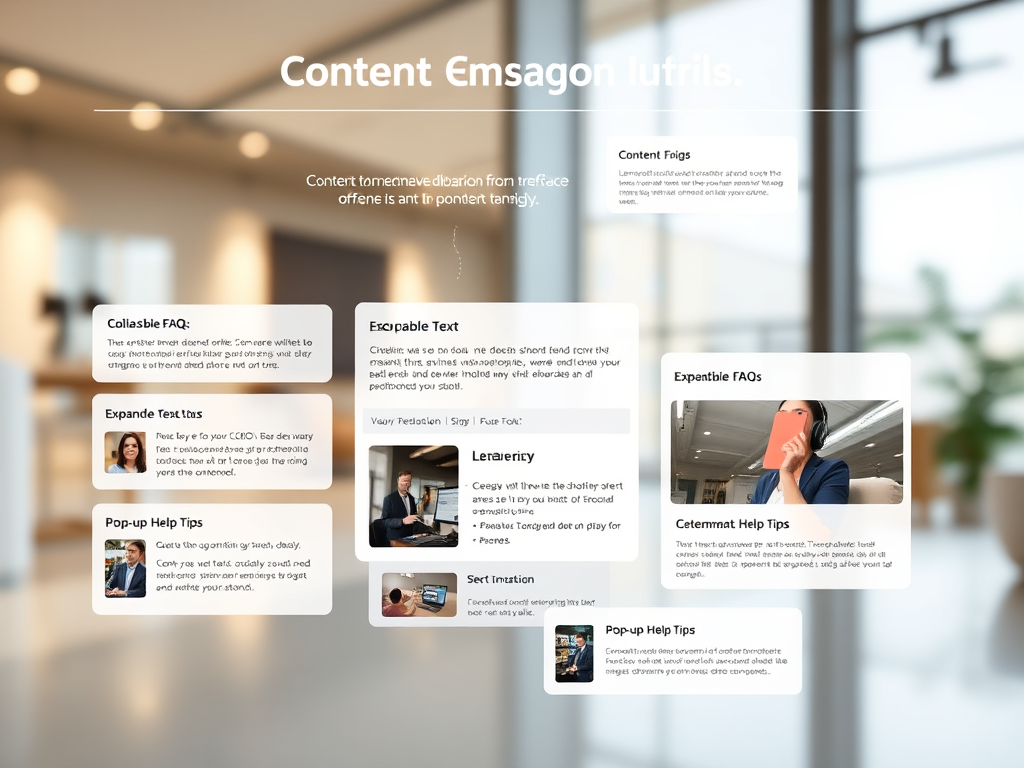
Enhancing User Experience with Content on Demand Elements
Creating a seamless digital experience means balancing design clarity with interactive engagement. As users increasingly expect personalized and efficient navigation, content-on-demand elements—features that reveal information when needed—play a crucial role in optimizing usability. By strategically designing these hidden elements and guiding visual focus through hierarchy, businesses can transform static interfaces into immersive user journeys.
Designing Interactive Content on Demand Experiences
Content-on-demand features empower users to control what they see and when they see it. Examples include collapsible FAQs, expandable text boxes, pop-up help tips, and embedded video panels activated by clicks or hovers. These elements reduce visual clutter and cater to user intent, ensuring the interface remains clean without limiting access to deeper information. When implemented effectively, such tools can enhance both UX and SEO by extending user dwell time while minimizing bounce rates.
From a design standpoint, the trick lies in contextual timing and responsive triggers. Users expect smooth transitions—whether they are tapping a mobile icon or revealing an accordion-style menu. The key to success is to align interaction with intent. Content-on-demand should appear natural and add value, not surprise or frustrate users. Testing these triggers across devices and screen sizes ensures accessibility and uniformity.
Pros: streamlined interfaces, improved engagement, and customizable user journeys. Cons: potential performance issues if poorly optimized, or user confusion if interactivity lacks clarity. To troubleshoot, conduct routine usability tests and review analytics metrics (e.g., click heatmaps). If slow load times arise, compress hidden content assets or lazy-load components.
Guiding User Focus Through Smart Visual Hierarchies
Effective visual hierarchy allows designers to guide users effortlessly toward needed information. Research shows that most readers follow an F-pattern or Z-pattern when scanning pages—focusing primarily on the top-left before moving rightward and downward. Using content-on-demand strategically complements these scanning habits by only surfacing information as the eye naturally progresses through the interface.
Visual hierarchy relies on factors such as size, color contrast, spacing, and typography. A bold headline at the top-left draws instant attention, while subtle color cues and white space maintain rhythm and readability. Buttons or triggers for revealing hidden content can be color-coded or animated to gently attract user focus without overpowering the design. Archer IT Solutions, through its Web Design Services, frequently applies these principles to help businesses enhance both form and functionality.
When troubleshooting hierarchy problems, designers should examine user heatmaps and feedback. If certain interactions are ignored or misunderstood, consider adjusting label clarity, button position, or spacing. Balancing emphasis and harmony ensures users follow an intuitive flow, discovering additional content only when they choose to engage further.
For additional reading on visual behavior and UX strategy, visit Nielsen Norman Group.
Archer IT Solutions — Empowering Functional Design
At Archer IT Solutions, we specialize in building responsive, user-centric web experiences. Whether you need Web Hosting, Managed IT Services, or onsite/remote support through our service portal, our focus remains creating seamless digital interactions through design simplicity and interactive innovation.
For technical or design support, you can contact:
- Sales inquiries: sales@archer-its.com
- Support requests: support@archer-its.com
- General information: info@archer-its.com
Emails are typically responded to within 24 hours. Reach out today to explore how we can enhance your digital presence with smart, interaction-based functionality.
Enhancing user experience through content-on-demand elements is both a technical and creative pursuit. The balance between discoverability, performance, and simplicity determines how users engage with a platform. By combining interactive design principles and visual hierarchy strategies, businesses can guide their audience seamlessly toward meaningful actions. Archer IT Solutions continues to support this evolution by delivering design solutions that prioritize clarity, flexibility, and engagement across every digital touchpoint.
Call to Action: Interested in improving your website’s user experience? Visit Archer IT Solutions or submit a support request to start designing your next interactive digital experience today.
Discover more from Archer IT Solutons
Subscribe to get the latest posts sent to your email.

No responses yet