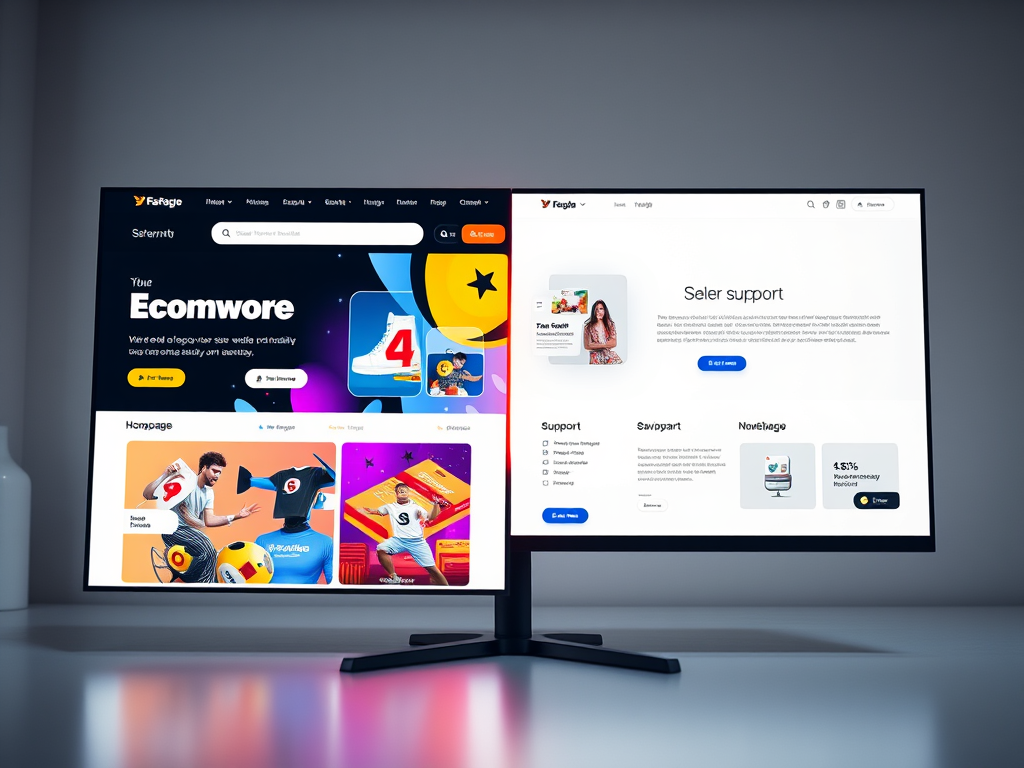
Designing a website isn’t just about choosing appealing colors or arranging content neatly—it’s about crafting user experiences that resonate with the purpose of each section. Different areas of a website often have distinct goals, functions, and audiences, and these differences demand tailored design approaches. From homepage layouts that grab attention to support pages focused on accessibility, thoughtful design differentiation can significantly shape how users interact with your content.
Why Different Site Sections Need Unique Design Choices
Every website serves multiple audiences and purposes, and each section represents a unique interaction point. For instance, an e-commerce homepage is meant to inspire browsing and discovery, while a checkout page should emphasize clarity, security, and trust. Trying to use one uniform design across both can frustrate users and lead to drops in engagement. According to Adobe’s State of Create Report (2023), 59% of users cite “design consistency with functional differentiation” as a top driver of satisfaction—meaning users appreciate when sections feel cohesive yet tailored to their purpose.
Another key reason for varied designs is cognitive load. Visitors navigate differently depending on intent. A blog reader, for example, looks for readability and flow, while a customer support seeker demands simplicity and quick answers. Adapting layouts—like white space, typography, and content hierarchy—can help each user efficiently achieve their goal. This strategy enhances both usability and trust.
Key takeaways:
- Each site section has unique goals and should communicate them visually.
- Overly uniform designs can obscure content hierarchy and confuse users.
- Differentiation, when used judiciously, improves engagement and flow.
Case Studies Showing How Tailored Layouts Improve UX
A clear example comes from BBC News (bbc.com/news), which intentionally uses varying color signals and layout densities between its main news portal and its Sport and Weather sections. The news homepage relies on neutral tones and modular storytelling, while the sports section adopts bolder colors and dynamic image grids to convey energy. This design distinction helps users immediately know where they are within the brand ecosystem.
Similarly, Shopify’s Help Center (help.shopify.com) differs visually from its main marketing site. The support section reduces visual noise by using softer tones, greater spacing, and consistent iconography for accessibility. This shift is deliberate: it directs focus toward problem-solving instead of product promotion. Studies report an 18% faster task completion rate among users when navigating support sections designed with this principle (Nielsen Norman Group, 2022).
Finally, Spotify’s web player (open.spotify.com) contrasts its browsing section’s dark theme with lighter editing or playlist views to indicate context changes. Users subconsciously recognize these visual cues as transitions, reducing misclicks or confusion.
Key takeaways:
- Tailored section design signals intent and context.
- Real-world sites like BBC, Shopify, and Spotify use design contrast effectively.
- Data supports improved navigation efficiency and satisfaction with distinct layouts.

In the end, your website should behave like a well-organized space—each room serving a clear purpose yet belonging to a cohesive home. By diversifying layouts, color palettes, and content emphasis according to user intent, you guide visitors intuitively and respectfully. Ask yourself: Which parts of your site need clarity? Which should inspire, inform, or convert? The answers will shape your design strategy. Reflect on your users’ goals and start tailoring experiences section by section—because great design isn’t just consistent, it’s contextually aware.
Discover more from Archer IT Solutons
Subscribe to get the latest posts sent to your email.


No responses yet