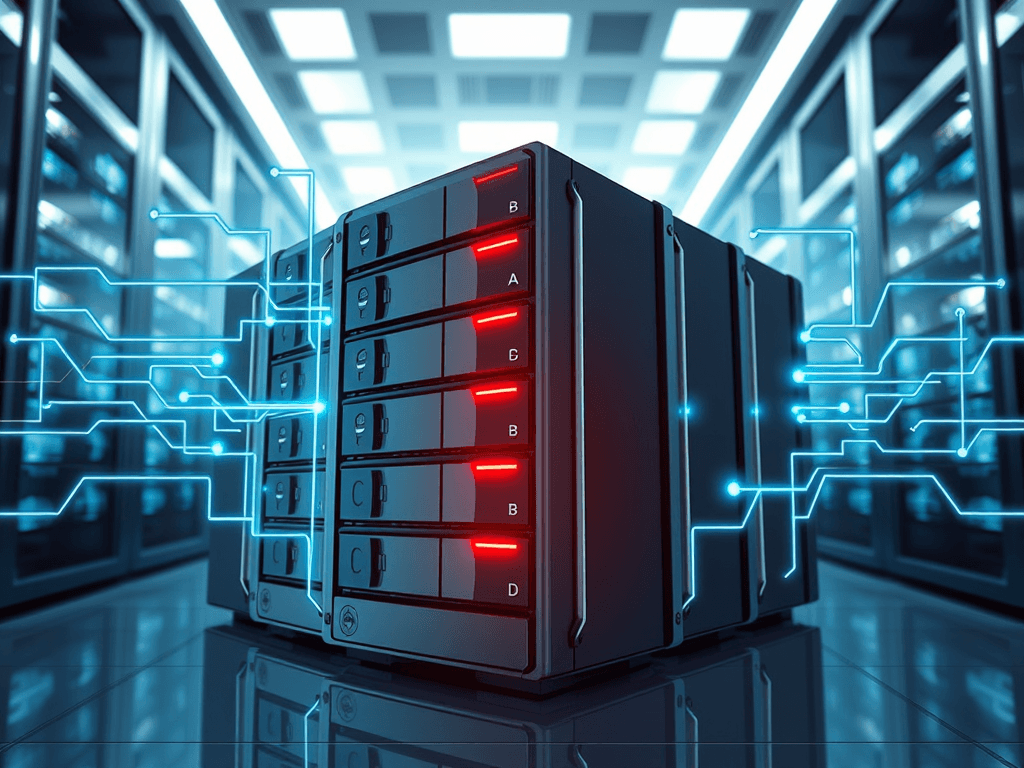
What is RAID 10? Understanding the Benefits and Challenges
RAID 10, also known as RAID 1+0, is a popular storage solution that combines the benefits of RAID 1 and RAID 0. It offers improved redundancy and performance, making it an ideal choice for businesses looking to enhance their data storage functionality. Let’s explore the features, benefits, challenges, and troubleshooting tips related to RAID 10, and see how it could be a game-changer for your web hosting or IT service needs.
How RAID 10 Works
RAID 10 requires at least four drives. It mirrors data across pairs of drives (RAID 1) and then stripes the data across multiple mirrored sets (RAID 0). This configuration ensures that if one drive fails, your data remains safe and accessible.
Example of RAID 10 Configuration
- Configuration: Four drives (A, B, C, D)
- Data Storage:
- Pair A: Data mirrored to B
- Pair C: Data mirrored to D
This configuration allows for higher performance while providing redundancy.
Benefits of RAID 10
- High Performance: RAID 10 improves read and write speeds due to striping.
- Data Redundancy: Protects against data loss with its mirroring feature.
- Fault Tolerance: Allows for one drive failure in each mirrored set without data loss.
Challenges of RAID 10
- Cost: Requires at least four drives, which can be expensive.
- Storage Efficiency: Only 50% of the total drive capacity is usable due to mirroring.
Pros and Cons of RAID 10
| Pros | Cons |
|---|---|
| High performance | Expensive |
| Data redundancy | Inefficient storage utilization |
| Fault tolerance | Requires more disks |
Troubleshooting Common RAID 10 Issues
- Drive Failure: If a drive fails, the system continues to operate, but it is crucial to replace the drive promptly to maintain redundancy.
- Slow Performance: Check for failing drives or misconfigurations within the RAID controller settings.
- Rebuild Issues: Ensure that all drives are compatible and functioning well; otherwise, the RAID may fail to rebuild properly.
Conclusion
In conclusion, RAID 10 provides a robust solution for data redundancy and improved performance. While it may come with higher costs, the benefits often outweigh the challenges, especially for businesses and web hosting solutions that prioritize data safety and quick access.
Frequently Asked Questions (FAQ)
What is the minimum number of drives needed for RAID 10?
RAID 10 requires a minimum of four drives to function.
Can RAID 10 be configured with different sizes of drives?
It’s recommended to use drives of the same size for optimal performance since the smallest drive in the array will dictate the usable size.
Is RAID 10 suitable for small businesses?
Yes, RAID 10 is suitable for small to medium-sized businesses that need both speed and redundancy in their data storage solutions.
Additional Resources
For more information on RAID configurations and IT storage solutions, check out these links:
For support or inquiries, please visit Archer IT Solutions or email us at support@archer-its.com.
By understanding RAID 10, you can make informed decisions that enhance your IT infrastructure, whether for personal use or within your business’s web hosting services.
Discover more from Archer IT Solutons
Subscribe to get the latest posts sent to your email.

No responses yet