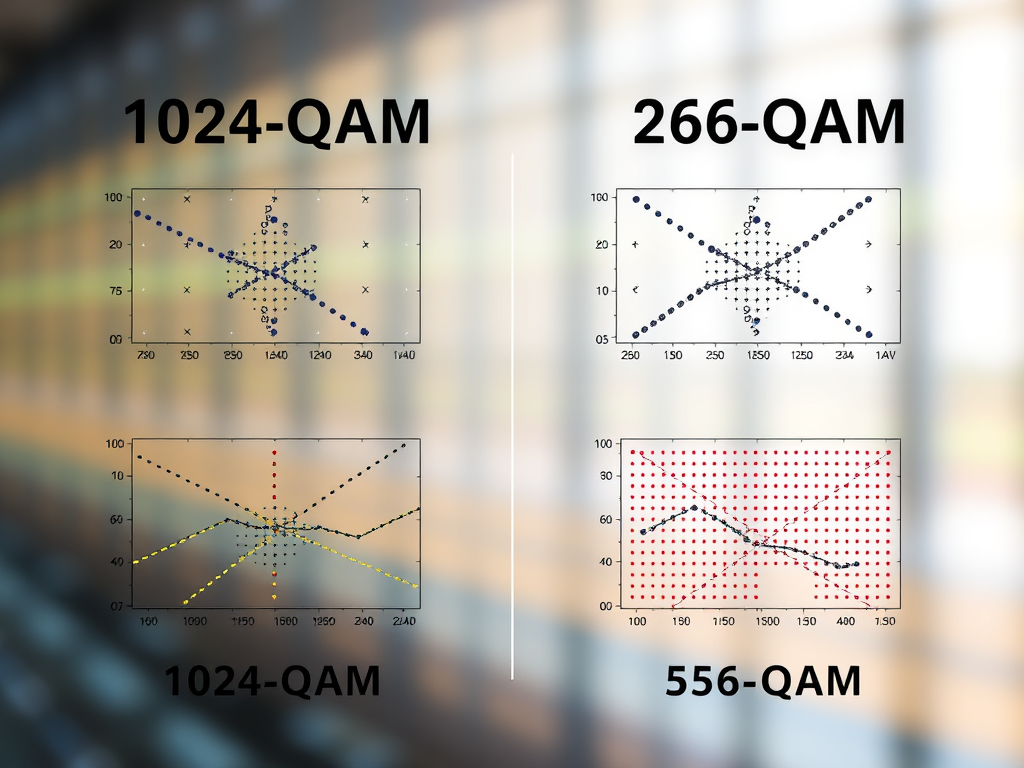
Understanding the Differences Between 1024-QAM and 256-QAM
Introduction to QAM
Quadrature Amplitude Modulation (QAM) is a key method used in digital communication systems. Understanding the differences between 1024-QAM and 256-QAM can greatly impact the efficiency and reliability of data transmission.
Key Differences
- Data Rate:
- 1024-QAM: Can transmit 10 bits per symbol, offering higher data rates.
- 256-QAM: Transmits 8 bits per symbol, making it slightly less efficient.
- Signal Noise Tolerance:
- 1024-QAM: More susceptible to noise and interference due to closer constellation points.
- 256-QAM: Offers better resilience against noise, making it more reliable in varying conditions.
- Use Cases:
- 1024-QAM: Typically used in high-speed broadband applications.
- 256-QAM: Commonly found in cable modems and Wi-Fi networks.
Pros and Cons
1024-QAM
Pros:
- Higher data throughput.
- Efficient in clear signal environments.
Cons:
- More prone to errors in noisy conditions.
- Requires higher signal quality.
256-QAM
Pros:
- Greater reliability in dynamic environments.
- Easier to achieve with lower signal quality.
Cons:
- Lower data rates compared to 1024-QAM.
- Less efficient overall.
Visual Hierarchy and User Engagement
Using distinct headings and bullet points effectively guides readers through the content. You may also want to consider visual aids such as diagrams of QAM constellations to clarify complex topics.
Troubleshooting Common Issues
When implementing QAM modulation techniques, users may encounter compatibility issues with devices. Here are some common troubleshooting tips:
- Loss of Signal: Ensure your devices support the modulation scheme used, as older devices may not handle 1024-QAM.
- Reduced Performance: Check the quality of your cables and connections; poor hardware can lead to signal degradation.
- Interference Problems: Utilize shielding or move devices away from sources of interference to improve signal clarity.
Conclusion
Understanding the differences between 1024-QAM and 256-QAM helps in choosing the right technology for your needs. Reflect on your specific requirements—whether it’s high data throughput or reliability—in your communication systems.
Additional Resources
For further reading, check these informative links:
Encouraging a hands-on approach in exploring these modulation techniques can lead to improved technical decision-making and a better grasp of digital communication technologies.

No responses yet